


Published: October 12, 2026
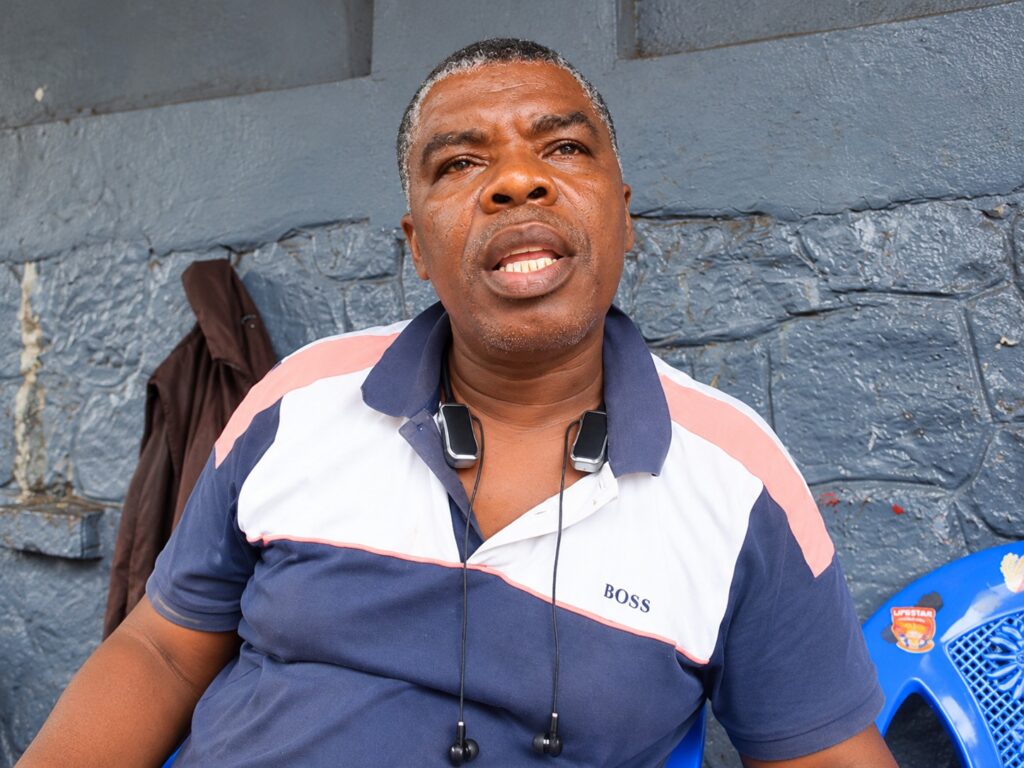
MONROVIA — Moses Harmon has spent more than two decades shining other people’s shoes, and the work has fed his four children. Now 53, he wants the government to help him and other shoe shiners learn new trades so they no longer depend on a single uncertain source of income.
By Blamo N. Toe
“We want help from the government,” Harmon said.
The National Shoe Shine Union of Liberia, founded on Nov. 13, 2013, to organize people working in the trade, shares his appeal and is chaired by Aaron D. K. Mulbah. Mulbah said the union wants members to have opportunities for skills development and support to grow their businesses.
Harmon said he has some knowledge of building construction but needs more training to develop it. He wants the government to set up vocational programs that would let shoe shiners learn more skills and earn extra income while they keep supporting their families.
Harmon said he started shining shoes in 2003, after he lost the capital for his dry goods business.
“I have four children, but I was doing a dry goods business before coming into this business. My hand went down. That’s how I was introduced to this, and I think it is better than the first business,” he said.
Unlike food items, which spoil if they go unsold, shoe-shining supplies can be stored, which Harmon said makes the trade easier to manage for someone with little capital. He said the work has sustained him and his family, and that he met his wife while working as a shoe shiner.
The trade also costs dignity. Harmon said some customers speak harshly to shoe shiners, insult them, or look down on them because of their work. He said many workers choose not to respond.
“This year makes me 53 years old, and I don’t feel bad when they insult; it is the society,” he said.
Mulbah said he has shined shoes for 25 years and called the trade a means of survival for Liberians who could not find other work. Earnings depend on how many customers come each day, he said. Some days bring enough to cover a family’s basic needs, and others do not.
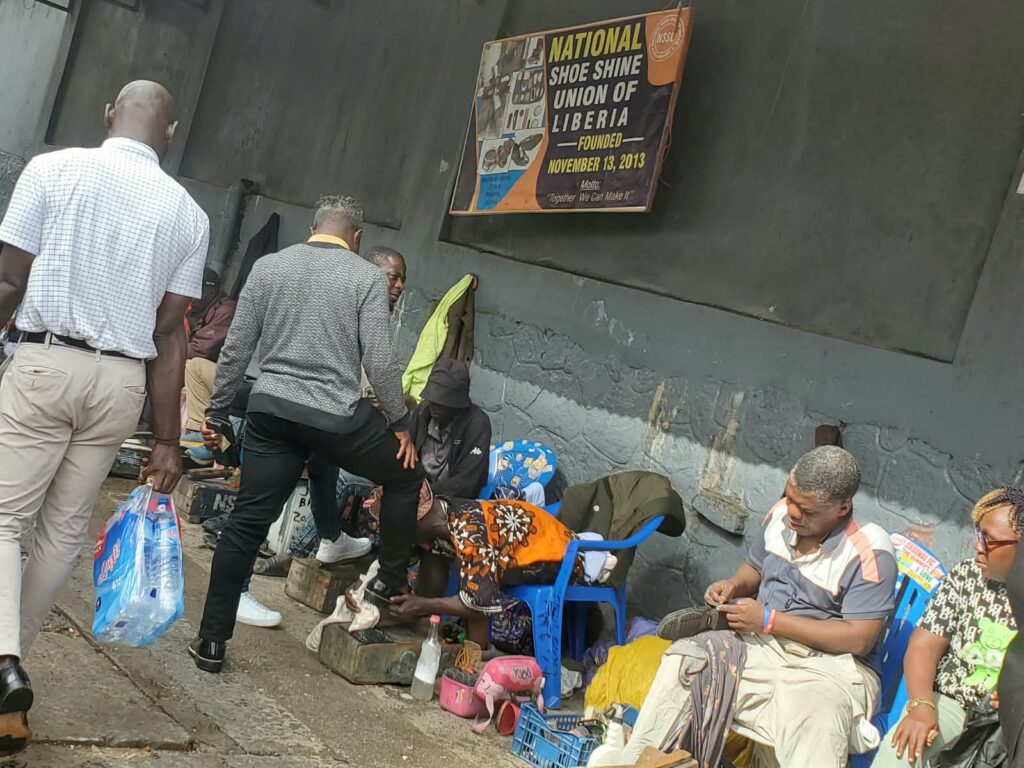
Harmon said past governments did help, but not much. He credited the Sirleaf administration with building a roof over the shoe shiners’ work area through Amara M. Konneh, the finance minister at the time. He also credited the Weah administration with replacing the old plastic gallons workers used as seats with chairs and shoe-shine boxes.
“We want help from the government. The only governments that helped were the Unity Party administration of Madam Ellen Johnson Sirleaf through former Finance Minister, now Senator Amara M. Konneh, who built this roof for us, then the CDC government through Abdul D. Kanneh, who provided these chairs and boxes, taking away the old gallons we had,” Harmon said.
He said the Ministry of Finance and Development Planning sometimes gives shoe shiners bags of rice and cooking oil, similar to what it gives its own employees. He said the practice began under Sirleaf and has continued under later governments, but that food handouts are not the long-term help members need.
Harmon said that, apart from those interventions, government officials have generally not identified with shoe shiners, even though some regularly have their shoes shined.
Mulbah said the union has members outside Montserrado County.






Discussion about this post