


Published: September 23, 2026
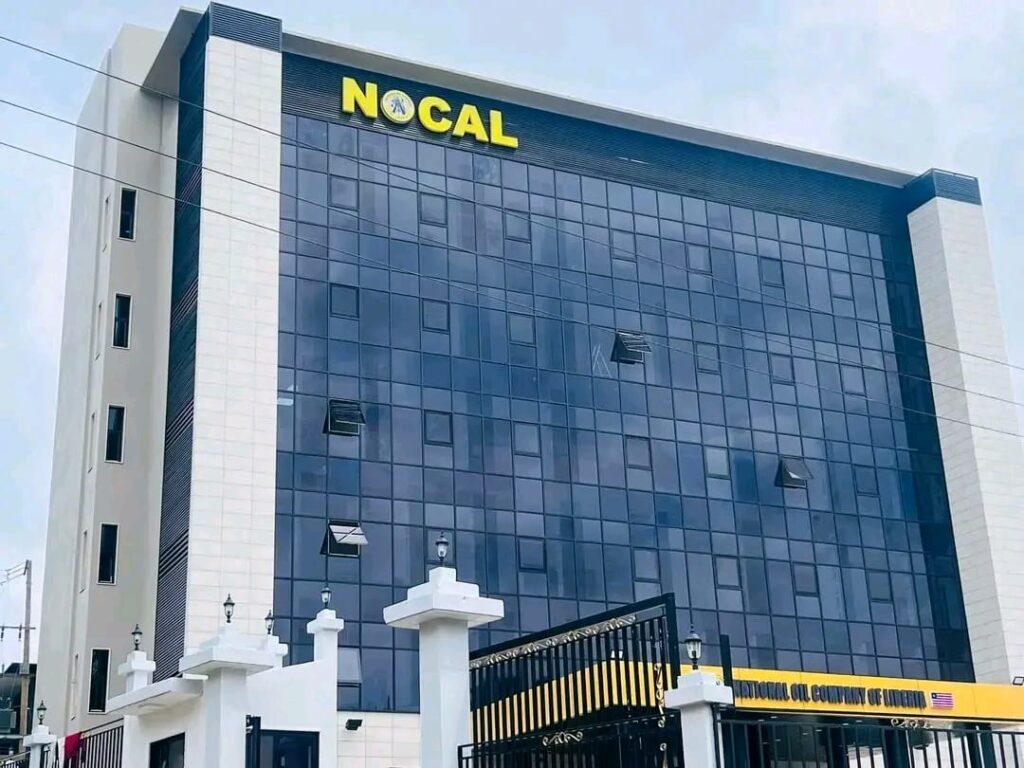
MONROVIA – The Commercial Court on Wednesday ordered the immediate closure and sealing of the National Oil Company of Liberia and the Ministry of Finance and Development Planning, turning a decade-old debt dispute involving two former NOCAL officials into contempt enforcement against two government institutions.
The closure order, issued by Commercial Court Clerk Randolph B. Sneh on the directive of Chief Judge Eva Mappy Morgan, commands Acting Sheriff Emmanuel Morris, or his deputy, to have NOCAL and the ministry “closed with immediate effect,” seal all doors and entrances to the premises and remove everyone inside. The sheriff must endorse his return on the back of the original order and file it with the clerk, stating how and in what form it was served.
The order was issued in a contempt case, Republic of Liberia versus NOCAL, which names the company, its president and CEO, and all its corporate officers as defendants. The contempt case grows out of an action of debt brought by former NOCAL officials Vida A. Mensah and Cllr. Idella Cooper Shannon against NOCAL, represented by its president and CEO, Atty. Saifuah Mai Gray. The matter is before the court in the September 2026 term. The Ministry of Finance is not named as a party in either case.
The dispute dates to NOCAL’s restructuring in 2015, when the state-owned oil company was in serious financial difficulty and its management structure was being changed.
Mensah and Cooper Shannon initially claimed about US$85,000 each. After years of litigation, interest and accumulated costs, the combined liability has grown to US$764,762, more than four times the original claims of roughly US$170,000.
The court’s latest order moves the case beyond a dispute over severance obligations and places the physical operations of two government institutions under judicial enforcement.
The development also puts NOCAL’s current financial management under scrutiny.
NOCAL’s vice president for finance and investment, Emmanuel T. Azango, told The Liberian Investigator the obligation was an old debt and that the government, particularly the Ministry of Finance, was expected to pay it.
Azango was held in contempt of court during Wednesday’s proceedings and made to sit on the court’s bench for more than two hours, The Liberian Investigator’s judicial correspondent reported.
Azango also said the court had demanded payment of 25 percent of the obligation. The closure order does not state an amount owed or any payment demanded.
Azango was not part of NOCAL’s management when the severance dispute arose, and the liability originated under an earlier administration. But once a judgment exists, the question becomes what the current management did to settle it before enforcement escalated.
The court’s order makes no distinction between NOCAL and the ministry Azango says should pay. Both are named in the closure directive, placing the dispute at the door of the government’s central financial institution and raising the question of how judgments against state-owned enterprises are handled in government budgeting and payments.
The Commercial Court is a specialized court that handles commercial disputes, including debt claims above a statutory threshold.
An Auditor-General’s report on NOCAL previously documented financial and governance irregularities, including payments described as lobbying fees and board-related expenditures, and recommended the recovery of some funds. Those findings are separate from the current action of debt and are not evidence of wrongdoing by anyone involved in this case.
In September 2026, the Liberia Anti-Corruption Commission said it had secured a court order concerning former NOCAL officials Rustonlyn Suacoco Dennis and Richmond Jallah over allegations including economic sabotage, misuse of public money or records and procurement violations. The LACC said the allegations remain subject to due process and have not been proven in court.
The case raises a broader question of how a government-owned corporation deals with financial obligations inherited from previous administrations. The debt did not originate under Azango’s tenure, but the current management now faces the consequences of a dispute that has survived years of litigation.





Discussion about this post