


Published: September 23, 2026
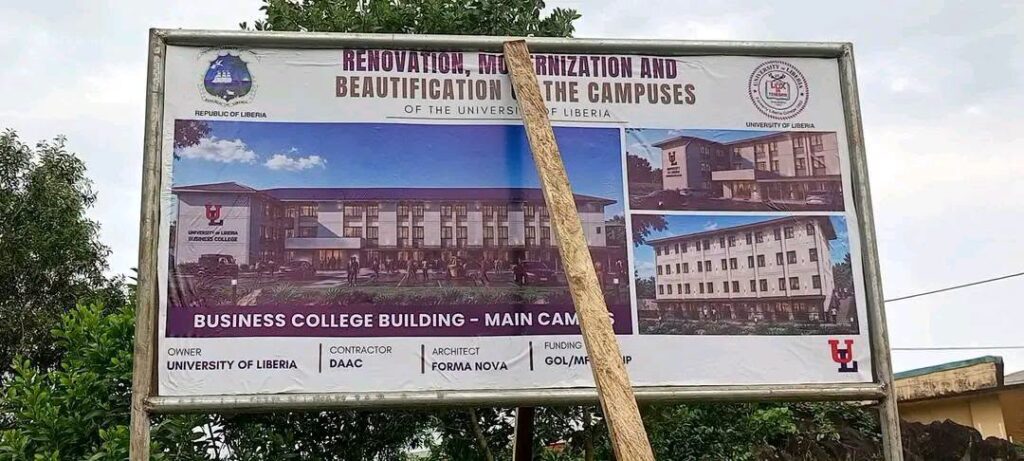
Renovation works are well underway at the University of Liberia. People are getting excited about campus renewal. A new vision of what UL can be is gradually taking shape, and hope in what higher education might become at the nation’s flagship university is being gaining momentum. One of our greatest collective hopes and dreams is finally on the road to realization!
By Layli Maparyan, Ph.D.
And, yet, controversy still surrounds the renovation exercise, and social media is rife with discussions that tear into the effort. For some, it is about anxiety about when school will reopen and whether it is possible to learn under the clamor of hammers and nails. For others, it is dismay at the prospect of online education, whether because students can’t afford the data to be online or because UL’s technological resources are too spotty to justify it. For others, it is still about suspicion that the renovation money won’t be well spent or, worse, that it will become (or has already become) a victim of corruption. It almost seems as if people expect the worst or wait for perfection before things can move forward. At the same time, it seems some don’t want to move forward at all, despite past cries for change.
All of this would seem like the perfect storm or a recipe for paralysis, if not for one thing: the scientific reality that all forward movement requires the co-existence of forces of construction and forces of destruction. When the dead of winter gives way to the renaissance of spring, ice cracks apart and old leaves decay while long-buried seeds crack open and new roots and shoots emerge. If it weren’t for the old leaves making rich soil for the long-dormant seeds, they might never grow and earth would just be barren. Renovation requires both destruction and construction. Old rotting wood, crumbling concrete, and rusted rebar must be cleared away before new and even better building materials can be installed. There is a certain holy sacrifice in this – sacrificing short-term comfort and convenience for long-term sustainability and conduciveness. Stated differently, sacrificing the bad for the good or the good for the great. This is where we are now.
In one of my earliest columns, I wrote about the pain of metamorphosis. Referring to the transformation of the caterpillar into the butterfly, I outlined the “messy soup” inside the cocoon that allows this profound transformation to take place. Well, here we are in the messy soup stage! Our caterpillar self – the hungry one that just eats and eats until it is ready to build its own cocoon and sleep inside – is yielding way to our butterfly self, namely, the beautiful one that will soar to new heights and bring us long-awaited joy and prosperity. These few years of renovation—because it is likely to take about three years—are our cocoon. Inside the cocoon, all that no longer serves UL will expire, and all that contributes to the emergence of our highest and best self as an institution will take shape.
In situations of historical import such as this, we must choose whether to align ourselves with the forces of construction or the forces of destruction. Both forces will inevitably co-exist and interact, but only one side – the side of positive forward movement – will ultimately prevail. We are writing our own place in history by the choice we make – and this choice is indeed an historic one.




Discussion about this post