


Published: September 23, 2026
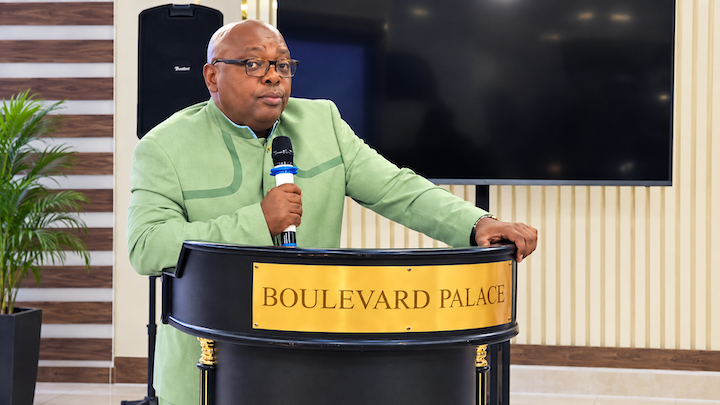
MONROVIA – Gender quotas and other measures to put more women in elected office may be beyond the reach of a new electoral law and could require a constitutional review, the head of the Law Reform Commission said Tuesday, urging completion of Liberia’s election-law overhaul by the end of 2027.
“Some of the issues that we are discussing right now… those things can only be done with a holistic, comprehensive, constitutional review process,” said Cllr. Bornor M. Varmah, the commission’s chairman and chief executive officer.
Varmah spoke at a technical discussion on electoral reform and women’s political participation convened in Monrovia by the House Committee on Elections and Inauguration and the United Nations Development Programme under the Liberia Electoral Reform Support Project. He pledged the commission’s support for temporary special measures.
He acknowledged that earlier reform efforts had failed and said this one must remain “irreversible and unabated.”
“Between today and maybe before the end of 2027, we must have consummated this entire process,” he said. That target falls ahead of the 2029 presidential and legislative elections.
Varmah said the commission is coordinating the reform and has begun a “very serious review of our electoral laws” with the National Elections Commission and the Governance Commission. He said the commission will shortly invite stakeholders to a national validation exercise, and he appealed for financial and logistical support to bring citizens from remote counties to take part.
“Before we consummate any drafting initiative, the people who are going to be the consumers of the law must be part of the consulting processes,” he said.
The Women Legislative Caucus of Liberia pushed for reform that moves women past symbolic participation. Montserrado County District 5 Rep. Prescilla Abram Cooper, the caucus’s vice chairperson on national affairs, said women must not only participate in elections but in governance.
“They must also be supported as leaders, policy makers, legislators, ministers, administrators, and decision makers,” she said.
Cooper said the reform must examine “the social, cultural, financial, institutional, political, and legal barriers that block women’s participation,” and called for careful consideration of temporary special measures, including quotas and reserved seats.
“Our goal should not simply be to copy another country’s model. We must develop a Liberia solution,” she said.
Monjurul Kabir of UN Women said Liberia’s commitments under the Convention on the Elimination of All Forms of Discrimination Against Women and the Maputo Protocol provide for temporary special measures.
“They are meant to speed up progress towards equality,” Kabir said. He said support for women running for office and the way parties select candidates matter beyond quotas.
Louis Kuupen, deputy representative of UNDP, tied the debate to recent remarks by President Joseph Boakai.
“Yesterday in the President’s remarks, he indicated that Liberia cannot be advocating for global women’s participation while not being able to demonstrate the same in the country. And that’s a powerful statement,” Kuupen said.
He said the UN system would offer comparative experience and technical guidance but that the decision rests with Liberians.
“Fundamental to UN electoral support is therefore a respect for national sovereignty and recognition that the legal framework for elections is for Liberians to debate and decide,” Kuupen said. He urged that the reforms be implemented in time for voters and candidates to understand the changes.




Discussion about this post