


Published: September 16, 2026
MONROVIA — Liberia is preparing to deploy specialized working groups nationwide to collect data on money laundering and terrorism financing risks. Authorities have begun the second round of the country’s National Risk Assessment.
The nationwide data collection exercise, scheduled to run from September through November 2026, is part of Liberia’s efforts to strengthen its defenses against money laundering, terrorism financing and proliferation financing while identifying emerging vulnerabilities within the country’s financial system.
The second National Risk Assessment, or NRA-2, will examine changes in Liberia’s financial landscape since the first assessment in 2019, including risks associated with new technologies and increasingly sophisticated criminal methods.
The exercise is expected to help authorities identify and understand vulnerabilities across key sectors and provide evidence to develop policies and allocate resources based on risk levels.
Liberia’s Anti-Money Laundering and Countering the Financing of Terrorism policy arm, the Inter-Ministerial Steering Committee, has designated Mohammed Ali Nasser, officer-in-charge of the Financial Intelligence Agency, as chairperson of the National Steering Committee overseeing the assessment.
The committee will work with competent authorities and relevant stakeholders to coordinate the NRA-2 process nationwide and present evidence-based reports to the Intergovernmental Action Group Against Money Laundering in West Africa, or GIABA, through the Inter-Ministerial Steering Committee.
Consistent with GIABA’s findings, the assessment will focus on three pillars: national ownership, sustainable capacity and actionable results.
The approach aims to ensure the final National Risk Assessment report becomes a “living document” that guides government policy and enables institutions to make risk-based decisions to combat illicit financial activities.
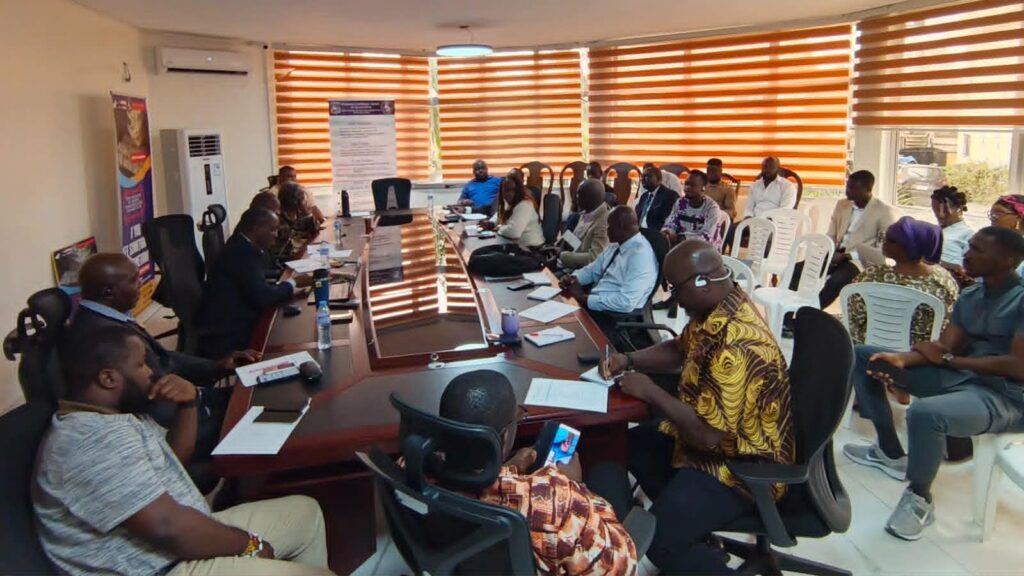
The exercise follows a five-day pre-risk assessment workshop that GIABA conducted, in collaboration with the FIA, in Monrovia from March 23-27, 2026. The workshop brought together representatives from Liberia’s public and private sectors to identify, assess and understand risks within the country’s anti-money laundering and counter-terrorism financing framework.
Participants included representatives from the Central Bank of Liberia, the Financial Intelligence Agency, the Ministry of Justice, the Liberia National Police, the Liberia Drug Enforcement Agency, the National Lottery Authority, the Ministry of Mines and Energy, the Liberia Revenue Authority, and the Liberia Bank for Development and Investment, among other institutions.
They organized the exercise into 10 specialized working groups to support the assessment process.
Before the nationwide exercise, enumerators were trained to use KoboCollect, a digital data collection platform that works both online and offline.
The technology is expected to enable real-time, more consistent data collection across major anti-money laundering and counter-terrorism financing sectors while improving questionnaire administration and data quality.
The NRA-2 is being undertaken in line with Financial Action Task Force Recommendation 1, which requires jurisdictions to identify, assess and understand their money laundering and terrorism financing risks and take appropriate measures to address them.
With the preparatory phase completed, Liberia’s specialized working groups are expected to begin nationwide data collection shortly, marking a major step toward developing an updated picture of the country’s financial crime risks and strengthening its response.





Discussion about this post