


Published: September 16, 2026
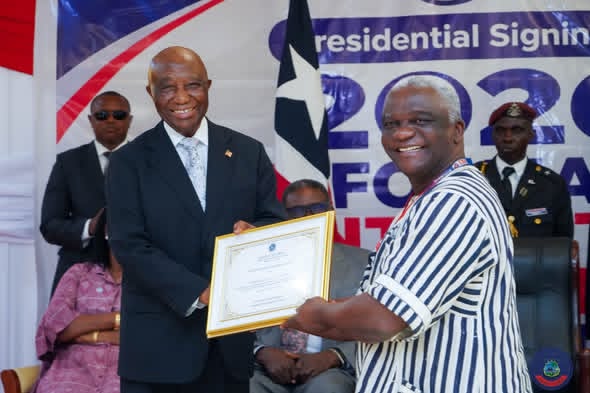
MONROVIA — President Joseph Nyuma Boakai Sr. has praised Liberia Revenue Authority Commissioner General James Dorbor Jallah and his team for leading efforts that have helped push Liberia’s domestic revenue collections beyond US$1 billion for the first time in the country’s 179-year history.
Boakai, in a special address Tuesday marking the historic milestone, described the achievement as a product of the leadership of the LRA, collaboration across government and the growing contribution of Liberian taxpayers. The president singled out Jallah and the LRA for their work in strengthening Liberia’s capacity to mobilize resources domestically, placing the revenue authority at the center of an achievement the administration considers significant for the country’s financial independence.
“It comes from the hard work of Commissioner General Dorbor Jallah and his team at the Liberia Revenue Authority, the Ministry of Finance and Development Planning, a whole-of-government approach, and the resilience of the Liberian people,” Boakai said.
The president’s commendation comes as the LRA records a dramatic rise in domestic revenue collections over the past three years. Collections increased from approximately US$612 million in 2023 to US$699 million in 2024 and US$848 million in 2025 before exceeding US$1 billion in 2026.
The latest figure represents an increase of more than US$388 million, or about 63%, compared with the 2023 collection. The government is now targeting US$1.3 billion in domestic revenue by the end of 2026.
Boakai said the significance of the achievement extends beyond the amount collected. He emphasized that the resources were mobilized domestically through taxes, duties, fees and other lawful payments rather than through borrowing or foreign aid. For the president, that distinction underscores the importance of the LRA’s role in strengthening the government’s ability to finance national priorities from resources generated within Liberia.
Boakai credits LRA leadership The president’s recognition of Jallah reflects the central role the LRA has played in the administration’s domestic resource mobilization efforts. Under Jallah’s leadership, the authority has intensified reforms targeting tax compliance and enforcement while seeking to modernize the administration of taxes and Customs.
The reforms include expanded digitalization, improved taxpayer services, stronger revenue assurance mechanisms and efforts to make tax and Customs administration more efficient. The administration has increasingly emphasized domestic revenue mobilization as a critical component of national development, particularly as Liberia seeks to strengthen its fiscal position and reduce dependence on external financing. Boakai said the achievement demonstrates what can be accomplished when government institutions work together toward a common national objective.
While crediting Jallah and his team at the LRA, the president also acknowledged the contribution of the Ministry of Finance and Development Planning (MFDP) and other government institutions under what he described as a “whole-of-government approach.” That cooperation, he said, helped create the conditions for Liberia to reach the unprecedented revenue figure.
Taxpayers share credit
Boakai also extended his commendation beyond government officials to the Liberians and businesses whose payments made the revenue achievement possible. He specifically recognized market women, traders, workers, professionals and businesses across the country. The president’s message effectively framed the US$1 billion milestone as a collective achievement rather than one belonging exclusively to the LRA.
The revenue authority’s responsibility is to assess, collect and enforce the country’s tax laws, but the funds ultimately come from taxpayers operating across Liberia’s formal and informal economy. Boakai’s acknowledgment of taxpayers also highlights the importance of public confidence in the tax system as the government seeks to sustain the revenue gains.
A new challenge for LRA
While celebrating the milestone, Boakai called for continued domestic resource mobilization and accountability. His message presents the achievement as a foundation for further work rather than the conclusion of the government’s revenue efforts. The US$1.3 billion target for 2026 means the LRA must sustain momentum and collect an additional US$300 million or more before the end of the year, depending on the precise level of collections when the milestone was announced.
For Jallah and the LRA, the president’s public commendation comes with an accompanying challenge: maintaining the gains while ensuring that revenue administration remains efficient, transparent and responsive to taxpayers. The authority’s ongoing modernization efforts will therefore be important as Liberia seeks to broaden its tax base, improve compliance and close revenue gaps.
The president also stressed that the ultimate measure of the revenue achievement must be its impact on Liberians. Increased domestic revenue, he said, must translate into tangible improvements in the lives of citizens. That means the historic collection figure will ultimately be judged not only by how much the LRA collects, but also by how effectively government uses the resources to support national development.
authority’s recent performance is among the administration’s notable achievements in strengthening domestic resource mobilization.
From US$612 million in 2023 to more than US$1 billion in 2026, Liberia’s revenue trajectory has changed significantly. Boakai attributed that progress to the LRA leadership, interagency cooperation and taxpayers, while urging all parties to maintain the momentum.
With the government aiming for US$1.3 billion by year-end, Jallah and his team now face the task of building on what the president has described as a historic achievement — turning a record revenue collection into a sustainable system capable of financing Liberia’s development priorities.





Discussion about this post