

Thursday, November 5, 2026
THE LIBERIAN INVESTIGATOR
No Result
View All Result
  • Home
  • Investigations
  • Cocaine Case
  • News
    • General News
    • National News
    • County News
    • Health
    • Human Interest
    • Press Release
    • Media
    • Environment
  • Politics
  • Business
  • International
  • Opinion
    • Opinions
    • Letters from the Editor
    • Letters to the Editor
    • Editorial
    • Commentary
  • Fact Checks
  • Lifestyle
    • Entertainment
  • Sports
  • Women & Grit
THE LIBERIAN INVESTIGATOR
No Result
View All Result
Home Feature

How One Woman’s Death Exposes Decades of Neglect in Arthington BackBush

by Alphanso G. Kalama
May 20, 2026
in Feature
Reading Time: 3 mins read
0

Published: May 20, 2026
ARTHINGTON, Montserrado County — Madam Massa bled to death 18 years ago while being carried in a hammock for two and a half hours toward the nearest clinic. She never made it. Her death was not an anomaly in Arthington Back Bush. It was a warning.

Today, the same dirt roads that killed Massa still trap the sick during rainy season and swallow motorbikes in the dry. Pregnant women are still carried in hammocks over muddy tracks that stretch for hours. There is no paved road, barely any phone signal, and until recently, no clinic. More than 37 communities in this corner of Montserrado County say they have lived this way for decades.

The irony cuts deep. This is Montserrado County — home to Liberia’s capital and the political base that produced two presidents. Yet its back country communities say they have been systematically ignored.

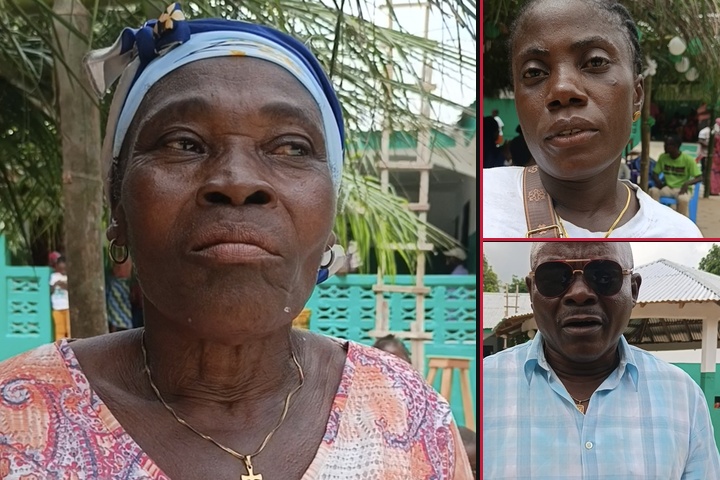
“Since 1985, no motor grader has been here,” said Momolu Dolo, the late Massa’s brother and a longtime community advocate. “People have been brushing the road with their bare hands.”

Dolo believes politics explains the neglect. He said the area fell out of favor after former President Samuel Doe turned against it when Charles Taylor launched his rebellion from here in 1989. Former President Ellen Johnson Sirleaf’s 12-year administration, he said, offered little improvement.

“When Ellen won in 2005, she did not want to come where Charles Taylor came from,” Dolo said. “All through her 12 years, attention was less in this place.”

But he resists framing the community’s suffering as a consequence of Taylor’s legacy. “The government should go everywhere, irrespective of the population,” he said. “We are calling on the national government to come and look after this place. It’s really, really difficult for us.”

The rainy season transforms the roads into trenches. “If you come here during the raining season, you will want to cry,” Dolo said. “Dry season, cars are almost getting stuck. That tells you how the rainy season can be.”

The isolation has made pregnancy a source of dread. With no reliable transport and no communications network, women in labor often deliver on the roadside before reaching help. Memah Moore, the area’s chairlady, said the walk to the nearest facility in Arthington exceeds four hours. “We mostly carry our patients in hammocks, especially pregnant women. They sometimes give birth on the road during the journey,” she said.

For years, traditional midwife Bandu Kamara made that journey in the dark with patients in crisis. “It hasn’t been easy. We have been traveling long distances, sometimes in darkness,” she said. “The situation became so severe that they often had to refer us to Redemption Hospital.”

After years of advocacy by Dolo, a private clinic operated by Refuge Place International, founded by Dr. Mosoka Fallah, recently opened in the community. Kamara called it “a rescue.” But the clinic cannot pave the roads, restore phone service, or reverse the broader underdevelopment that residents say is pushing people out.

“The citizens are tired of brushing the road with our hands every day, nothing happening,” Dolo said. “That’s why it’s this deplorable. We are pushing many people away from here.”

Massa’s death, 18 years on, remains the defining symbol of what happens when geography and politics decide who receives healthcare. In the county that sent two presidents to the Executive Mansion, Arthington Back Bush is still waiting for a road.

Tags: Arthington Back BushLiberia healthcare crisisMontserrado Countyrural roads Liberia
ShareTweetSend
Alphanso G. Kalama

Alphanso G. Kalama

Alphanso G. Kalama is a Liberian journalist with over seven years of experience in broadcasting and newsroom reporting, specializing in environmental issues and human-interest stories. He began his career in 2018 as a rural reporter in Lofa County with Radio Life and has since contributed to leading radio, print, and online outlets in Liberia.

Next Post
New Liberia Lone Star head coach Mohammed Adil Erradi speaks during his official unveiling in Monrovia.

Erradi Eyes AFCON Return, Hails Weah's Legacy

Liberia’s Lone Star national football team poses before an international match ahead of the 2027 AFCON qualifying campaign.

Lone Star Draw Mali, Cape Verde, Rwanda in AFCON Qualifiers 

Discussion about this post

Search The Investigator

No Result
View All Result
Request for Expressions of Interest: GB MIS consulting services, Ministry of Gender, Children and Social Protection Request for Expressions of Interest: GB MIS consulting services, Ministry of Gender, Children and Social Protection Request for Expressions of Interest: GB MIS consulting services, Ministry of Gender, Children and Social Protection

Recommended

GRAND CAPE MOUNT COUNTY, Liberia — Community Sustainable Development Platform, working alongside Women & Youth Development International, has convened a high-level coordination meeting with traditional leaders, local authorities and neighboring communities of Weilor Town, marking a major step forward in the Customary Land Formalization process in Grand Cape Mount County. The meeting, held Sunday as part of Phase I of the CLF process, centered on community self-identification — a legally mandated requirement for communities seeking formal recognition of customary land ownership under Liberia’s 2018 Land Rights Act. Building Consensus, Preventing Conflict The gathering brought together elders, women and youth leaders, persons with disabilities, representatives of surrounding communities and land governance actors. Organizers said the inclusive approach was aimed at strengthening coordination, promoting transparency and reducing the risk of land-related disputes as the process moves forward. Introducing the initiative, CSDP Team Lead Alfred B. Kiawu formally unveiled the project, titled Supporting Communities for Inclusive Land Governance. He said the effort is being jointly implemented by CSDP, WYDI and the people of Weilor Town. Kiawu disclosed that the project is currently being carried out without direct donor funding, relying instead on community commitment and collaboration among local organizations, while engagements with development partners and donors continue to secure support for the full completion of the CLF process. Legal Framework Explained Frank M. Sheriff, the county land administrator of the Liberia Land Authority, provided a detailed presentation on the CLF process and its legal foundation. He explained key provisions of the Land Rights Act, including Liberia’s four categories of land ownership and the rights of customary land-owning communities. Sheriff also highlighted safeguards for women, youth and vulnerable groups, conflict-prevention mechanisms built into the law, and the complementary roles played by traditional leaders and local authorities in securing and managing customary land rights. Government Backs the Process Grand Cape Mount County Superintendent Folley Kiatamba commended CSDP and WYDI for supporting Weilor Town, describing the CLF process as the only lawful pathway for communities to secure customary land ownership. He urged residents of Weilor Town and neighboring villages to actively engage in the process through awareness and capacity-building activities, stressing that broad participation is essential to its success. Kiatamba pledged his full support for the initiative and assured participants that the Liberia Land Authority, through the county land administrator, would provide continuous technical guidance throughout the process. The coordination meeting reaffirmed strong stakeholder commitment to inclusive land governance, peaceful coexistence and secure land tenure, placing Weilor Town on a clear and lawful path toward formal recognition of its customary land rights. convened high-level

Weilor Town Advances Customary Land Claim With High-Level Coordination Meeting

10 months ago

“Our Children Are Dying Mysteriously”: Wee District Residents Alarmed Over Alleged Ritualistic Activities

2 years ago

    Home

    About Us

    Investigations

    News

    Politics

    Business 

    Editorial

    Contact Us

    Privacy Policy

    Advertise with us

    Stay updated with the latest news by subscribing to our WhatsApp Channel

    Click Here to Subscribe

    © 2026 THE LIBERIAN INVESTIGATOR. All Rights Reserved and subject to the Terms of Use Agreement. Developed By: Klariba Holdings, Inc

    No Result
    View All Result
    • Home
    • Investigations
    • Cocaine Case
    • News
      • General News
      • National News
      • County News
      • Health
      • Human Interest
      • Press Release
      • Media
      • Environment
    • Politics
    • Business
    • International
    • Opinion
      • Opinions
      • Letters from the Editor
      • Letters to the Editor
      • Editorial
      • Commentary
    • Fact Checks
    • Lifestyle
      • Entertainment
    • Sports
    • Women & Grit

    © 2026 THE LIBERIAN INVESTIGATOR