


Published: April 3, 2026
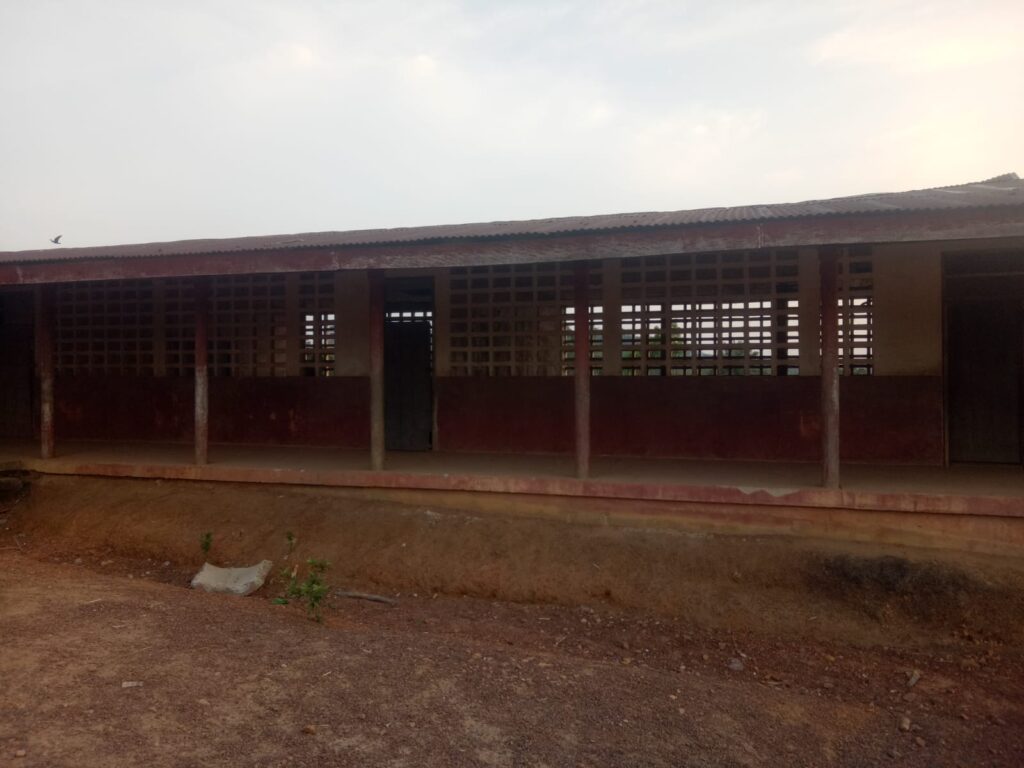
Kayata, Bong County – A deepening crisis at the Kayata Public School in Electoral District #3, as the lack of adequate seating capacity has forced dozens of students to cut their education short.
The situation, described by school authorities as alarming, is undermining students’ ability to learn effectively and threatening access to education in the rural community.
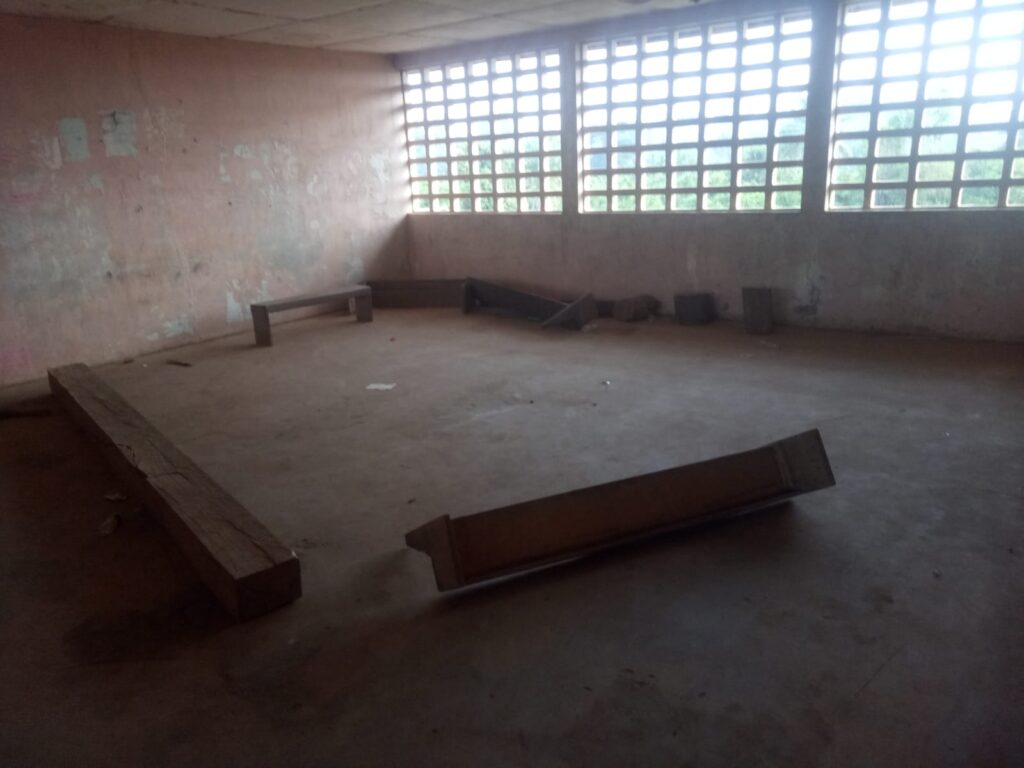
Students Sit on Bare Floors
Speaking in an interview with The Liberian Investigator recently, the Principal of Kayata Public School, Arthur Woulenta, revealed that the institution, being the only government-run school in the area, is grappling with a severe lack of seating capacity.
According to him, the shortage has left many students with no option but to sit on bare classroom floors during lessons.
“We don’t have enough chairs for the students,” Woulenta said. “Most of them are sitting on the ground, and that is not a good environment for learning.”
He explained that long hours spent sitting on the floor have made it difficult for students to concentrate, maintain proper posture, and fully participate in classroom activities.
Donation Falls Short
Woulenta disclosed that efforts had previously been made to address the situation, noting that Senator Prince Moye donated 50 chairs to the school. However, he noted that the intervention has not had a lasting impact.
“Most of the chairs that were given to us are damaged,” he said. “The few that are still in use cannot serve the entire student population.”
The principal noted that the damage to the chairs has effectively returned the school to its previous state of hardship, reamplifying the already difficult situation.
Enrollment Drops Significantly
The impact of the poor learning environment is already being felt in the school’s enrollment figures.
Woulenta revealed that the school once had about 200 students, but the number has drastically declined as students continue to leave.
“Some of the pupils have dropped out because they are frustrated,” he explained. “They cannot continue to learn in conditions where they are sitting on the ground every day.”
Currently, the school has just over 180 students, a figure he fears may continue to drop if urgent intervention is not made.
Broader Challenges Facing the School
Beyond the lack of chairs, the principal highlighted other serious challenges confronting the institution. He pointed to the deteriorating condition of the school’s infrastructure, including decaying doors and ceilings, stating that the school has not been renovated for about two decades.
Woulenta also raised concerns about the reliance on unpaid volunteer teachers, a situation he said is affecting the quality and consistency of instruction.
“These are people who are sacrificing their time without any salary,” he noted. “It is difficult to maintain quality education under such conditions.”
Call for Urgent Government Intervention
In light of the challenges, Woulenta is calling on both county authorities and the national government to intervene urgently.
He stressed the need for additional chairs, rehabilitation of the school’s infrastructure, and placement of volunteer teachers on payroll to ensure that students receive quality education.
“We need help,” he appealed. “If nothing is done, more students will leave, and the future of these children will be at risk.”






Discussion about this post