Monday, September 28, 2026
THE LIBERIAN INVESTIGATOR
No Result
View All Result
  • Home
  • Investigations
  • Cocaine Case
  • News
    • General News
    • National News
    • County News
    • Health
    • Human Interest
    • Press Release
    • Media
    • Environment
  • Politics
  • Business
  • International
  • Opinion
    • Opinions
    • Letters from the Editor
    • Letters to the Editor
    • Editorial
    • Commentary
  • Fact Checks
  • Lifestyle
    • Entertainment
  • Sports
  • Women & Grit
THE LIBERIAN INVESTIGATOR
  • Home
  • Investigations
  • Cocaine Case
  • News
    • General News
    • National News
    • County News
    • Health
    • Human Interest
    • Press Release
    • Media
    • Environment
  • Politics
  • Business
  • International
  • Opinion
    • Opinions
    • Letters from the Editor
    • Letters to the Editor
    • Editorial
    • Commentary
  • Fact Checks
  • Lifestyle
    • Entertainment
  • Sports
  • Women & Grit
THE LIBERIAN INVESTIGATOR
No Result
View All Result
Home Featured

$51m in aid cancelled, more cuts loom, finance minister discloses

by Nyantee S. Togba | The Liberian Investigator
February 25, 2025
in Featured
Reading Time: 3 mins read
0

Published: February 25, 2025

Monrovia – Liberia’s development agenda has suffered a major setback as the United States Agency for International Development (USAID) has suspended or canceled projects worth $51 million, affecting critical sectors such as health, education, elections, and domestic revenue mobilization. The abrupt withdrawal of funding raises serious concerns about the country’s economic stability and public service delivery.

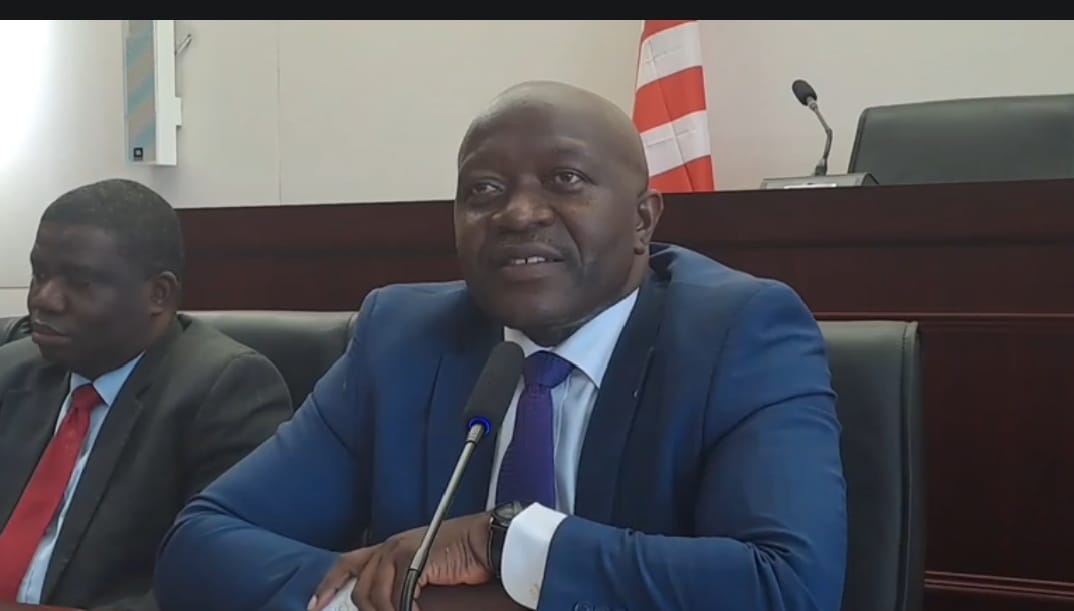
Appearing before the Senate Committees on Health, Education, Agriculture, Finance, and Development Planning on Monday, Minister Augustine Ngafuan painted a grim picture of the funding cuts’ impact. He revealed that key initiatives affected include a $23.4 million project aimed at strengthening the education system, a $20 million school feeding program, and a $17.9 million tax reform support initiative.

“At first, we were talking about a freeze, but now it has transitioned to outright cancellations,” Ngafuan lamented.

He warned that the funding halt would significantly hinder efforts to expand access to quality education, improve healthcare services, and enhance Liberia’s tax collection mechanisms. With these projects in limbo, thousands of Liberians, including teachers, healthcare workers, and government personnel, are at risk of losing their jobs.

“As these USAID projects are being discontinued, many people are losing their jobs,” he noted. “Some initiatives remain intact, but there is growing uncertainty. Many fear that their projects could be next on the chopping block. We must pray for a resolution.”

Senate Scrambles for Solutions

In response to the crisis, the Senate committees have pledged to explore alternative financing mechanisms to mitigate the adverse effects of USAID’s withdrawal. Lawmakers also voiced concerns about the broader implications of these cuts and are pushing for long-term, sustainable solutions to prevent further disruptions.

To gain deeper insight into the situation and craft a strategic response, the committees have summoned the Ministers of Education and Health for further discussions.

The U.S. Political Shift Behind the Cuts

The aid suspension follows a broader shift in U.S. foreign policy under President Donald Trump, who has been vocal about his disdain for American-funded international programs. Speaking at the Conservative Political Action Conference (CPAC) over the weekend, Trump singled out a $14 million USAID grant to Liberia for a social cohesion project, dismissing it as a “scam.”

Trump had previously criticized a separate $1.4 million allocation intended to boost voter confidence in Liberia, calling it a “fraud.” The Liberia Domestic Election Observation (LIDEO) initiative, designed to enhance electoral integrity and public trust, is now at risk of being discontinued.

“We want to give them confidence in Liberia,” Trump mocked, reiterating his broader skepticism of foreign aid.

The social cohesion project, developed in response to Liberia’s civil war history, was intended to promote peace and stability by fostering interethnic dialogue, reconciliation, and youth empowerment. Liberian officials have argued that such programs are crucial for maintaining the country’s fragile peace.

Tech billionaire Elon Musk, who leads the U.S. Department of Government Efficiency (DOGE), recently scrapped a $17 million USAID-funded tax policy initiative for Liberia. Taking to his social media platform X, Musk defended the decision, stating, “Why would anyone think that this is a good use of YOUR tax money?”

The now-canceled initiative was designed to modernize Liberia’s tax system by transitioning from a goods and services tax to a value-added tax (VAT) by 2026. It also aimed to digitize tax collection and enhance government capacity to generate domestic revenue.

Musk’s decision to pull the plug aligns with his broader push to eliminate what he deems as wasteful federal spending. However, for Liberia, the loss of this project raises concerns about the government’s ability to implement much-needed fiscal reforms.

Tags: aid cutsUSAID
ShareTweetSend
Nyantee S. Togba | The Liberian Investigator

Nyantee S. Togba | The Liberian Investigator

Next Post

Rep. Cole accuses Sen. Moye of sabotaging former lawmakers' careers

Shaping Africa’s tax narrative: Insights from the ATAF-ATMEN media event in Burkina Faso

Discussion about this post

Search The Investigator

No Result
View All Result

Recommended

NEC Budget Director reportedly booked smuggling documents

2 years ago
Sen. Chea Introduces Bill to Ban Advance Payment for Emergency Care After Deaths Outside Redemption Hospital By Blamo N. Toe CAPITOL HILL, Monrovia — No Liberian would be turned away from emergency or childbirth care for failing to pay upfront, under a bill introduced in the Senate after two women reportedly died outside a Monrovia hospital that allegedly refused to admit them. Sinoe County Senator Augustine S. Chea's bill would require public health facilities to provide emergency and labor services free of charge and bar private hospitals from demanding advance payment before treating, admitting or stabilizing a patient in an emergency. Titled "An Act to Establish Free Emergency and Labor Medical Services in Public Health Facilities and to Prohibit Requirement of Advance Payment for Emergency and Labor Care Treatment and Admission at Private Health Facilities," the measure seeks to ensure no one is denied urgent care because of financial hardship. It comes amid mounting public anger over patients turned away for inability to pay, a problem that has long dogged the health sector. The proposal follows the reported deaths of two women outside the gate of Redemption Hospital in New Kru Town after they were allegedly denied emergency treatment. One, Tenneh Nagbe, a woman in her 30s who had given birth only a week earlier, reportedly died while waiting for care. Her sister-in-law, Manssia Wass, said hospital staff took the patients' details at the gate but never returned to admit them despite repeated pleas from relatives. Nagbe died in a relative's arms, and a second woman in similar distress also died outside the compound, the family said. Redemption Hospital, allocated US$420,000 in the 2026 national budget, has drawn criticism before, including a 2025 report of a woman giving birth at its gate and the 2023 death of a young mother after alleged treatment delays. Presenting the bill, Chea said pregnant women, accident victims and other patients needing urgent care are routinely placed at grave risk when treatment is conditioned on deposits. Public hospitals, funded by taxpayers, should never withhold care in life-threatening situations, he argued. "Since public facilities are financed by the people, it is unjust to deny those same people services during life-threatening situations," he said. He said requiring payment before emergency care runs counter to international medical standards and to the ethical duty of doctors to preserve life. "The first priority of any health facility should be to stabilize a patient and save their life, regardless of their financial status," Chea said, adding that while private hospitals carry legitimate operating costs, payment cannot be used as a barrier to emergency admission or stabilization. On a motion by Maryland County Senator J. Gbleh-bo Brown, the bill received its first reading and was circulated to senators ahead of a second reading. Under Rule 38 of the Senate Standing Rules, it must undergo committee review before returning to plenary for debate and possible amendment. If passed, the measure would rank among Liberia's most significant health reforms in years, potentially ending the practice of demanding advance payment before emergency and maternity care.

Sen. Chea Introduces Bill to Ban Advance Payment for Emergency Care After Deaths Outside Redemption Hospital

4 months ago

    Home

    About Us

    Investigations

    News

    Politics

    Business 

    Editorial

    Contact Us

    Privacy Policy

    Advertise with us

    Stay updated with the latest news by subscribing to our WhatsApp Channel

    Click Here to Subscribe

    © 2025 THE LIBERIAN INVESTIGATOR, All Rights Reserved and subject to Terms of Use Agreement. Developed By: Klariba Holdings, Inc

    No Result
    View All Result
    • Home
    • Investigations
    • Cocaine Case
    • News
      • General News
      • National News
      • County News
      • Health
      • Human Interest
      • Press Release
      • Media
      • Environment
    • Politics
    • Business
    • International
    • Opinion
      • Opinions
      • Letters from the Editor
      • Letters to the Editor
      • Editorial
      • Commentary
    • Fact Checks
    • Lifestyle
      • Entertainment
    • Sports
    • Women & Grit

    © 2023