



Published: April 3, 2026
Liberia is once again at a delicate intersection—where what is legally correct meets what the public is willing to believe.
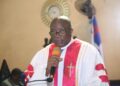
President Joseph Nyuma Boakai’s nomination of Jonathan K. Weedor as Chair of the National Elections Commission (NEC) has sparked a debate that goes beyond law and enters the deeper terrain of trust. And rightly so.
On the face of it, the process is straightforward and lawful. The Constitution establishes the NEC as an autonomous body, while the Elections Law clearly gives the President the authority to nominate commissioners, including the Chair, subject to Senate confirmation.
There is no ambiguity here. If the nominee meets the qualifications, Liberian citizenship, age requirement, good character, and no active political party affiliation, then the appointment stands on solid legal ground.
By that measure, Jonathan Weedor’s nomination is not illegal.
But this moment calls for a broader lens.
The concern being raised by civil society and political actors is not rooted in statutory violation. It is rooted in perception — how Liberians see the independence of the very institution that will referee their elections.
Weedor is not being questioned for lack of competence. In fact, even his critics acknowledge his experience. He understands the electoral system. He has worked within it. He knows its mechanics and its pressures.
The issue is whetherhe can be trusted to stand above politics.
That question has emerged because of his perceived proximity to the ruling establishment during the 2023 elections. Whether those perceptions are fair or overstated is, in some ways, beside the point. In electoral matters, perception often carries as much weight as fact.
And in Liberia’s context, where elections are closely contested and trust in institutions is still evolving, perception can shape acceptance or rejection of outcomes.
It is also important to be honest about our own history.
Liberia has, time and again, appointed individuals with prior political exposure to positions that demand neutrality. Some have gone on to serve with distinction. Others have struggled under the weight of public skepticism.
The law, as it stands, does not prohibit someone from having had past political involvement. It only requires that such ties be severed before assuming office.
So again, the question is not legality.
It is judgment.
The NEC is not just another public institution. It is the guardian of electoral credibility. When it speaks, it declares winners and losers. When it acts, it shapes national stability.
That is why the bar for its leadership must be higher than compliance with the law. It must inspire confidence across party lines, across regions, across divides.
Supporters of Weedor argue, reasonably, that competence should matter most. That Liberia needs experienced hands to manage increasingly complex elections.
They are not wrong.
But competence without trust is fragile. And trust without competence is dangerous. The country cannot afford either imbalance.
This editorial takes a balanced but firm position:
Jonathan Weedor’s nomination is legally sound. It follows the Constitution and the Elections Law. There is no clear breach of the rules governing such appointments.
However, it is also a decision that carries real perception risks.
At a time when Liberia must strengthen confidence in its electoral system—not test it—appointments to the NEC should ideally reduce doubt, not invite it.
The responsibility now rests with two actors.
The Senate must treat this nomination with the seriousness it deserves. Confirmation hearings should not be routine. They should probe deeply, examining not just qualifications, but independence, judgment, and public confidence.
And if confirmed, Weedor himself will carry an even heavier burden.
He will have to prove, through action, not words, that he is independent. That he is fair. That he is guided not by past associations, but by constitutional duty.
He will need to communicate clearly, act transparently, and lead decisively to reassure a skeptical public.
In the end, Liberia’s democracy will not stand or fall on what is written in law books alone.
It will stand on whether citizens believe that those entrusted with power will use it fairly.
That is the true test before the NEC, and before Jonathan Weedor.



Discussion about this post