


Published: November 27, 2026
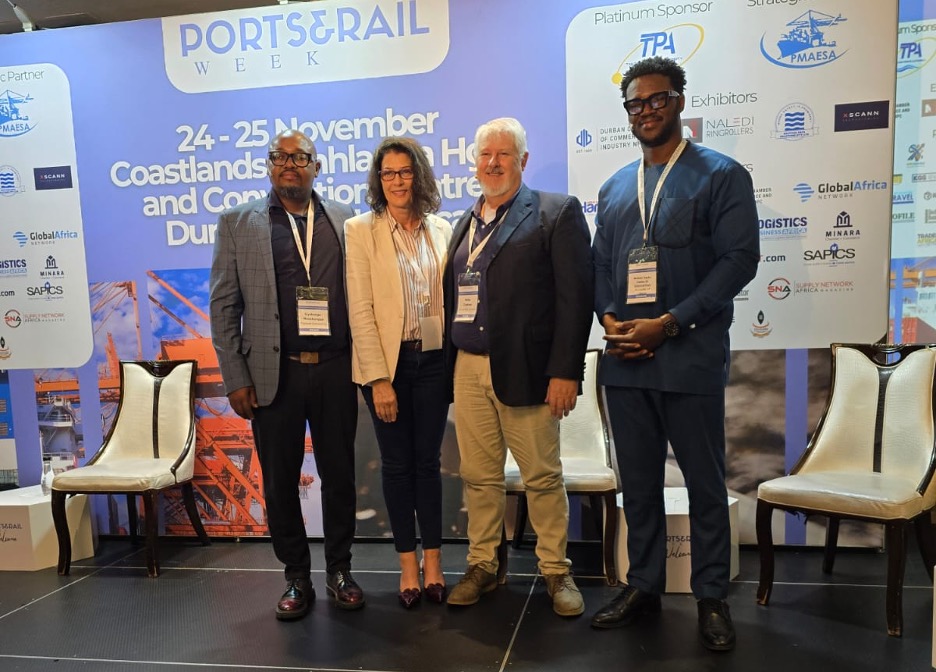
DURBAN, South Africa — A two-day Ports and Rail Conference has ended in Durban, South Africa, with a call for port authorities across Africa and the Western Indian Ocean to establish a coordinated maritime connectivity framework to optimize cargo movements, attract direct shipping services, strengthen regional trade and build long-term economic resilience.
The conference brought together port executives, maritime professionals and industry stakeholders to explore practical solutions to advance integrated port and rail infrastructure, enhance regional connectivity and improve Africa’s competitiveness in global trade.
Liberia was represented at the conference by Mulbah Gwesa, executive director for ports and harbor, and Pewee Baysah, executive director for corporate communication, of the National Port Authority.
Presenting on behalf of NPA Managing Director Sekou A. M. Dukuly, Gwesa highlighted Liberia’s strategic Atlantic location and proximity to countries within the Mano River Union as an opportunity to position the country as a regional maritime and logistics gateway.
He noted that Liberia can serve regional cargo flows through competitive port infrastructure, reliable transport corridors and efficient cross-border connectivity.
Presenting on inland logistics hubs, dry ports and the importance of public-private partnerships in infrastructure development, Gwesa emphasized the need for African countries to develop integrated logistics systems that extend beyond traditional seaport operations.
He explained that effective inland logistics hubs and dry ports should provide container storage, customs processing, cargo inspection, consolidation and empty-container management services. Such facilities, he added, should also accommodate truck staging, warehousing, cold-chain facilities and value-added logistics services where market demand supports them.
Gwesa further underscored the importance of assessing rail-linked logistics facilities and road-served hubs as complementary transport solutions while establishing transparent access, tariff, service and concession arrangements.
He stressed that Africa’s economic competitiveness increasingly depends on resilient ports, efficient rail networks, modern inland logistics facilities and seamless border operations.
According to him, public budgets alone cannot meet the scale and pace of infrastructure investment required across the continent. He emphasized that well-structured public-private partnerships can combine public stewardship with private-sector capital, technical expertise, innovation and operational efficiency.
Speaking at the close of the conference, Col. Andre Ciseau, secretary-general of the Port Management Association of Eastern and Southern Africa, said delegates had extensively explored the opportunities and challenges confronting Africa’s ports and rail sectors.
He highlighted regional integration, infrastructure development, technological innovation, investment and institutional collaboration as critical pillars for transforming Africa’s transport and logistics landscape.
Ciseau stressed that the future of Africa’s transport and logistics sector depends on the collective commitment of governments, port authorities, development partners and private sector stakeholders to building efficient, interconnected, competitive, resilient and sustainable transport networks.
The conference attracted port executives and representatives of maritime and transport organizations from several African countries, including Liberia, South Africa, Namibia, Kenya, Tanzania and Seychelles.
The National Port Authority’s participation reflects its commitment to strengthening international partnerships, modernizing infrastructure and exploring innovative logistics solutions that could position Liberia as a competitive maritime gateway in West Africa and the wider African trading network.






Discussion about this post