


Published: November 23, 2026

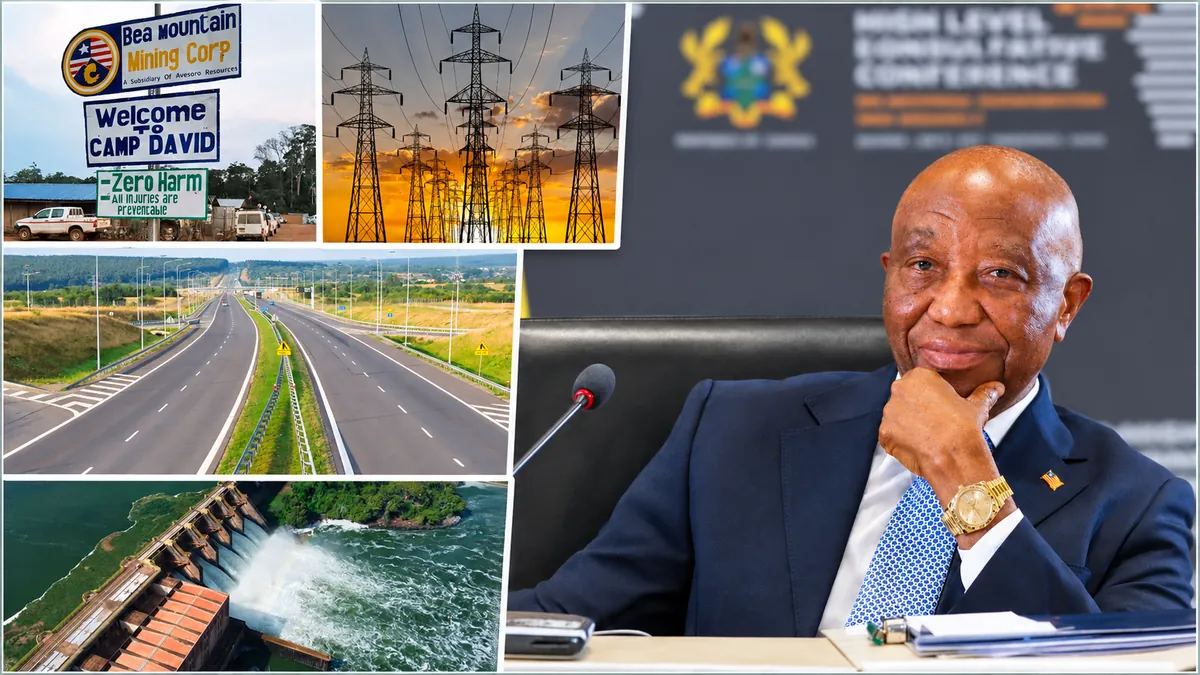
MONROVIA — The government has concluded a US$5.7 billion infrastructure deal with Bea Mountain Mining Corporation. The deal would add 270 megawatts of electricity through four new power plants, more than three times the capacity of the Mount Coffee hydropower plant, and build a 146-kilometer highway. It would be paid for largely with extra revenue the gold miner owes as gold prices rise.
President Joseph Nyuma Boakai received the Master Infrastructure Development Agreement from the Inter-Ministerial Concession Committee on Sunday after months of negotiations, according to a government statement. The formal signing is set for Wednesday, Nov. 25. The agreement will then go to the Legislature for ratification.
The statement called the agreement “the single most transformative catalyst for the nation’s development in decades.” It said the agreement would remove two of the biggest constraints on Liberia’s development, which the deal itself identifies as power and roads.
Hydropower makes up 210 megawatts of the planned capacity. The agreement provides for a 100-megawatt plant on the Via River, a 100-megawatt plant on the St. Paul River known as SP3, and a 10-megawatt plant further along the St. Paul River known as SP4. A 60-megawatt biomass plant near the Via dam would complete the program.
Three reservoirs with a combined storage capacity of 10 billion cubic meters would hold water when river flows are high and release it through the turbines when flows fall. That is meant to address one of the grid’s oldest problems. Hydropower is the main source of supply, but generation at Mount Coffee declines during the dry season, contributing to recurring shortages and load shedding. The statement cautioned that actual output would depend on rainfall, river flows and how the reservoirs and plants are run.
The deal also covers transmission. A 150-kilometer main line would connect the new plants to the Mount Coffee substation. A second 150-kilometer line would run from the Via plant to Nimba County, and a 5-kilometer line would serve Bong County. Both the Nimba and Bong lines include substations. The agreement sets aside US$230 million to upgrade substations, transformers and transmission lines on the national grid.
The agreement’s flagship road is the 146-kilometer Liberia Development Road, which would link the power plants to key facilities. The statement said a further US$1 billion is earmarked for road networks connecting all regions of the country. It did not say whether that amount is part of the US$5.7 billion total.
Under the financing arrangement, the government will set aside additional revenue payable by Bea Mountain, which the statement said was made possible by higher gold prices. The company will continue its regular payments into the Consolidated Account. The government described the arrangement as innovative financing that would reduce Liberia’s debt burden. The statement did not say how much extra revenue is involved, or how the arrangement differs from the company’s existing obligations.
The program is to be carried out over five years. The biomass plant and the transmission lines are targeted for completion within two years.
The plan would expand a still-small grid. The Mount Coffee Hydropower Plant returned to its full installed generating capacity of 88 megawatts in June, when Boakai commissioned the 20-megawatt Solar Photovoltaic Plant at the Mount Coffee Hydropower Complex on Friday, June 5, 2026. The Bush Road thermal plant has an installed capacity of 38 megawatts, according to the Liberia Electricity Corporation. Under its energy compact with the World Bank, the government aims to expand electricity access to 100,000 households per year, up from 70,000, which would raise the national electricity access rate to at least 75 percent by 2030.
The Via River and the upper St. Paul have long been studied for hydropower. A study for the West African Power Pool examined the next hydropower generation project on the St. Paul and Via Rivers, following the commissioning of the Mt. Coffee Hydro Power plant. In 2023, the World Bank Group pledged US$300 million to the Republic of Liberia to build a second Hydroelectric Dam (SP-2) further up the St. Paul River in Lower Bong County, a 150-megawatt project. The statement does not mention SP2 or say how the new plants would fit with it.
Bea Mountain operates the New Liberty Gold Mine in Grand Cape Mount County, the country’s largest industrial gold operation. In 2023, the Legislature extended its Mineral Development Agreement, with House members voting in favor of the Amended Mineral Development Agreement, giving Bea Mountain an additional 25 years of operations in Liberia. Under the 2013 contract terms, the royalty rate on gold is set at 3 percent on a net smelter return basis.
The royalty has drawn criticism as gold prices have risen. Grand Cape Mount Sen. Dabah Varpilah has described the flat 3% royalty rate that Bea Mountain pays under the existing agreement as inadequate and has proposed a progressive royalty regime that adjusts to market prices to ensure the country captures a fair share of windfall profits.
The government said the program advances the ARREST Agenda for Inclusive Development. It said construction and operation would create jobs and train Liberians in engineering, construction and power operations, and that more reliable electricity would help hospitals keep essential equipment running and businesses reduce interruptions.



Discussion about this post