

Published: November 16, 2026
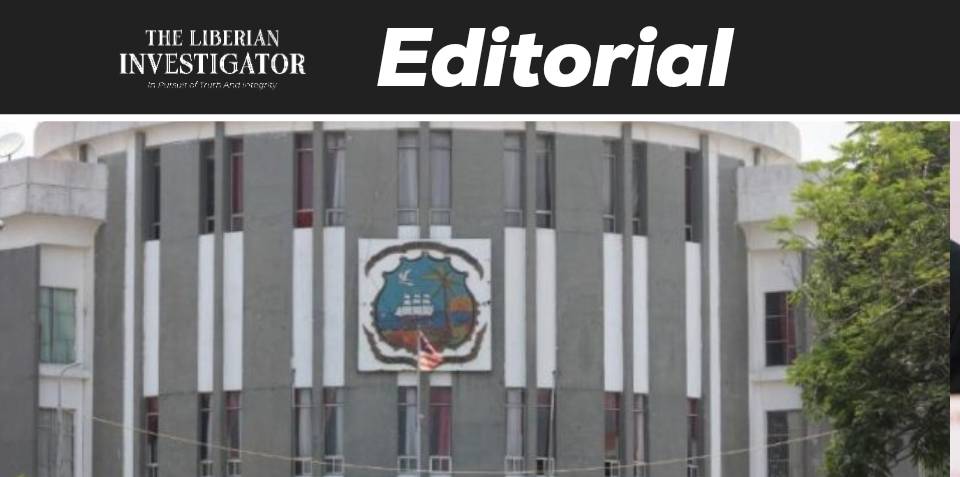
The National Legislature has a serious credibility problem. This time, it is not about political infighting or leadership disputes. It is about public money and the contradiction between the Legislature’s responsibility to enforce fiscal discipline and its apparent inability to exercise that discipline within its own institution.
According to figures in the draft National Budget for Fiscal Year 2027, the Legislature spent US$64.26 million between January and September 2026, against an approved annual allocation of US$57.18 million. In nine months, lawmakers exceeded their entire year’s budget by approximately US$7.1 million, spending 112% of their appropriation with three months remaining.
How can the Legislature credibly demand financial discipline from the Executive when its own spending raises serious questions about budgetary control?
We recognize that the Legislature is an independent branch of government with legitimate operational responsibilities. Lawmakers require resources for oversight, constituency engagement and legislative activities. But institutional independence is not immunity from accountability.
Consider where the money went.
Constituency visits, allocated US$1.12 million, consumed US$6.23 million by September — more than five times the approved amount. Transfers for committee hearings rose from US$1.41 million to US$6.46 million.
The Public Accounts Committee, responsible for examining government expenditures, received US$3.6 million against an approved US$738,312. The Legislative Budget Office received US$2.28 million against US$600,000.
These extraordinary increases demand explanations.
Who authorized them? Under what legal provisions were additional resources released? What activities justified such substantial expenditures? And what measurable benefits did Liberians receive?
These are not hostile questions. They are the minimum requirements of responsible public financial management.
Equally troubling is the reported expenditure of US$1.62 million on “District Development Projects,” a budget line showing no approved allocation.
That does not automatically establish wrongdoing. Lawful budget adjustments are possible. But where adjustments occurred, the public deserves to see the authorizations, funding sources, project locations and evidence of implementation.
Another contradiction deserves attention.
In October, more than 40 representatives reportedly boycotted the reopening of the legislative session, complaining about unpaid constituency visitation, district project, fuel and medical allowances.
Yet the draft budget indicates that constituency visitation spending had exceeded its annual allocation more than fivefold by September.
Aggregate expenditure figures do not establish that every lawmaker received the allowances owed. Nevertheless, the apparent contradiction demands reconciliation.
If millions were recorded as spent while lawmakers complained of unpaid benefits, where did the money go, who received it and what obligations remained outstanding?
The implications extend beyond Capitol Hill.
By September, the Legislature had spent approximately US$14 million more than the Ministry of Education. While their responsibilities differ, the comparison should provoke reflection in a country where schools struggle with inadequate facilities, instructional materials and other necessities.
Every dollar committed to one institution carries an opportunity cost.
Teachers, health workers and ordinary citizens are repeatedly reminded that government resources are limited. Communities awaiting roads, clinics, and safe drinking water are told to be patient.
The Legislature cannot reasonably demand such sacrifices while leaving its own expenditure patterns unexplained.
And Capitol Hill is not alone. The draft budget shows that the National Security Agency and Ministry of Youth and Sports also exceeded their annual appropriations by September.
These findings warrant broader scrutiny of expenditure controls across government.
But the Legislature bears a heavier responsibility because it approves the national budget and exercises oversight over public spending.
Now comes the defining test.
The proposed 2027 budget allocates US$58.2 million to the Legislature — approximately US$6.1 million less than it had already spent during the first nine months of 2026.
Lawmakers must decide whether to accept greater fiscal restraint or seek additional funding.
There is nothing inherently improper about requesting more resources when justified. What would be unacceptable is increasing their allocation without first accounting for the current overruns.
The draft budget also contains an unexplained discrepancy: One table records approximately US$6.66 million in capital project spending, while another reports US$4.44 million.
That US$2.2 million difference requires reconciliation.
The Ministry of Finance and Development Planning must disclose the legal authority and funding sources behind expenditures exceeding original appropriations. The Legislature must publish detailed expenditure records, and the General Auditing Commission should independently examine the relevant transactions.
Spending above an original appropriation does not automatically establish corruption or illegality. But neither does the absence of proven wrongdoing excuse the failure to explain public expenditure.
Accountability begins with transparency, not accusations.
Liberia needs a Legislature that is adequately funded, independent and capable of holding government accountable. But it also needs lawmakers who respect the standards they impose on others.
As legislators examine the 2027 budget, they must first explain how their institution exhausted its 2026 allocation and spent millions more.
Until then, every lecture from Capitol Hill about prudent spending will invite one uncomfortable question:
If lawmakers cannot convincingly account for their own budget, on what moral authority do they demand accountability from everyone else?
Public accountability cannot be a one-way obligation. Those who approve the nation’s spending must account for their own.


Discussion about this post