


Published: November 13, 2026
ANTALYA, Türkiye — Liberia is taking steps to make climate resilience a central requirement in the planning, design and construction of public infrastructure, as the government moves to address the growing threats of heavy rainfall, flooding and extreme weather conditions to roads, bridges and other critical facilities.
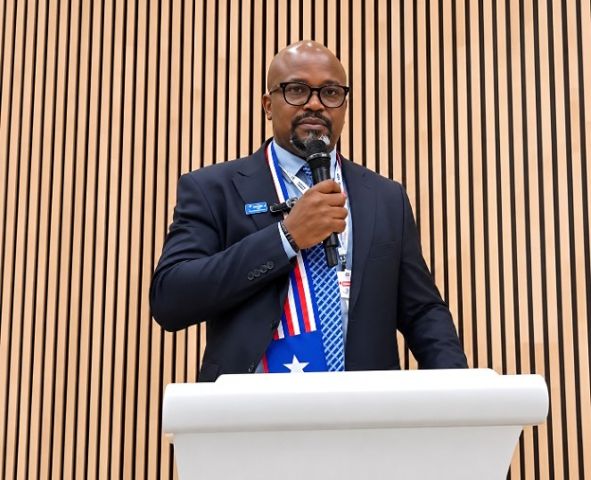
Public Works Minister Roland Layfete Giddings says the government is shifting toward climate-responsive engineering and nature-based solutions to ensure infrastructure investments remain sustainable and can withstand increasingly unpredictable weather patterns.
Speaking on November 10 at a side event at the Liberia Pavilion during the 31st United Nations Climate Change Conference (COP31) in Antalya, Türkiye, Giddings stressed that Liberia can no longer afford to build infrastructure without adequately considering environmental and climate-related risks.
The event, held under the theme, “Building Partnerships to Scale Nature-Based Infrastructure: South-South Exchange on Institutional Capacity, Cross-Sector Collaboration, and Climate Finance,” brought attention to the need for stronger institutional cooperation and innovative approaches to infrastructure development.
Giddings pointed to Liberia’s annual rainfall of nearly 5,000 millimeters, emphasizing that such conditions require a fundamental shift in how infrastructure projects are conceived, designed and implemented.
He said roads, bridges, drainage systems, dams, airports and other public facilities must be developed with greater consideration for hydrological risks, extreme rainfall, flooding and long-term climate variability.
The minister acknowledged existing weaknesses in Liberia’s infrastructure systems, particularly inadequate drainage and water management, which have contributed to the vulnerability of roads and communities during periods of heavy rainfall.
According to him, improving drainage infrastructure and integrating sustainable water management systems into engineering designs are essential to protecting public investments and reducing the recurring costs of infrastructure damage.
As part of the government’s response, Giddings disclosed that the Ministry of Public Works has signed a memorandum of understanding with Conservation International to promote a green-grid infrastructure approach.
The partnership seeks to integrate natural ecological systems, vegetation and conventional engineering methods into infrastructure development to improve durability, strengthen environmental protection and reduce climate-related risks.
Unlike traditional approaches that rely primarily on concrete and other engineered structures, nature-based solutions incorporate natural systems to help manage stormwater, reduce erosion and improve the resilience of infrastructure.
Giddings said the collaboration has already supported approximately four weeks of technical training for engineers at the Ministry of Public Works over the past two months.
The capacity-building initiative focuses on equipping government engineers with the knowledge and practical skills needed to incorporate nature-based solutions into infrastructure planning, design and implementation.
The minister emphasized that strengthening technical expertise within government institutions is critical to ensuring that climate-responsive engineering becomes a consistent feature of Liberia’s infrastructure development programs rather than an isolated intervention.
He also called for closer coordination among government ministries, technical professionals, environmental organizations and international development partners to advance sustainable infrastructure investments.
According to Giddings, addressing climate-related infrastructure challenges requires collective action, stronger institutional capacity and sustained access to technical and financial resources.
He maintained that climate resilience should no longer be treated as an additional consideration after infrastructure projects have already been designed.
Instead, he argued, climate risks must be assessed and addressed from the earliest stages of project planning through construction, implementation and long-term maintenance.
The proposed approach could have significant implications for Liberia’s road construction and rehabilitation programs, particularly in communities frequently affected by flooding, erosion and poor drainage.
By integrating climate considerations into infrastructure development, the government hopes to improve the lifespan of public facilities, minimize damage from extreme weather and ensure more efficient use of public resources.
Giddings reaffirmed the Ministry of Public Works’ commitment to strengthening sustainable engineering practices and promoting infrastructure investments that respond to Liberia’s changing environmental conditions.



Discussion about this post