


Published: November 11, 2026
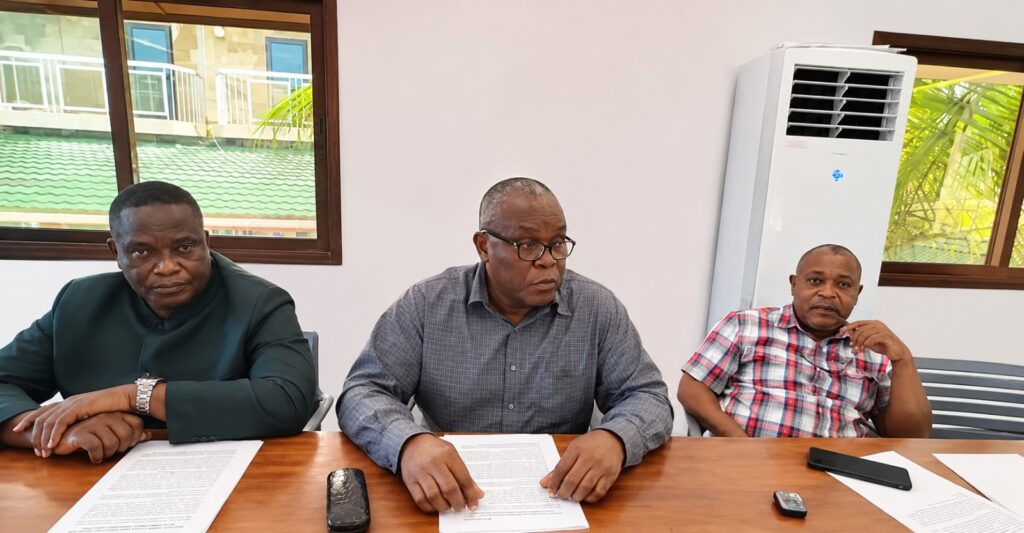
MONROVIA — Liberia aims to significantly increase rubber production over the next four to five years, with industry stakeholders crediting tighter export restrictions and improved regulatory enforcement for gains in a sector where the country is reportedly Africa’s second-largest rubber producer.
The Rubber Development Fund Incorporated (RDFI) and the Rubber Planters Association have announced plans to expand rubber cultivation, strengthen local processing, and support farmers in six additional counties to boost production and maximize economic benefits from the country’s rubber industry.
Speaking at a conference Tuesday in Monrovia, an industry official attributed recent improvements to initiatives involving the Rubber Growers and Farmers Industry (RGFI) and Executive Order No. 166, which prohibits exporting unprocessed rubber.
The official said the restrictions have helped address illegal exports, particularly attempts by traders to smuggle raw rubber out of Liberia by falsely declaring it as other commodities.
According to the official, some traders previously concealed unprocessed rubber in shipping containers while declaring different products to evade export regulations.
However, strengthened inspection and scanning procedures at the Freeport of Monrovia have reportedly made such practices increasingly difficult.
The official explained that the enhanced enforcement measures allow authorities to detect improperly declared shipments, with violators facing penalties when caught.
The restrictions are intended to encourage domestic processing, strengthen Liberia’s rubber industry and ensure the country derives greater economic value from its natural resources rather than relying heavily on raw commodity exports.
The official maintained that increasing local processing would help create additional opportunities within the rubber value chain while supporting the long-term growth of the sector.
Beyond export restrictions, industry stakeholders are expanding rubber development activities into six additional counties, increasing the program’s coverage from nine to 15 counties.
The newly included counties are Lofa, Grand Gedeh, River Gee, Sinoe, Maryland and Grand Kru.
According to the official, each of the six counties is implementing between three and four projects designed to empower local farmers, encourage rubber cultivation and increase production at the community level.
The expansion is expected to provide farmers in previously underserved areas with greater access to agricultural support and opportunities within the rubber industry.
The official said the initiative reflects efforts to broaden participation in rubber production beyond traditional cultivation areas, particularly in rural communities where agriculture remains a major source of livelihood.
Meanwhile, RDFI and its partners are preparing to distribute free rubber planting materials to farmers beginning in 2027 as part of a broader strategy to replace aging rubber trees with improved, high-yielding varieties.
“By next year, by this time, we’ll be giving free stocks out to farmers to replace the old stock by the new plumes that will give them high yields,” the official said.
The planned intervention is intended to address declining productivity associated with aging rubber plantations, which can reduce yields and limit farmers’ earnings.
By introducing improved planting materials, industry stakeholders hope to increase production capacity and strengthen the competitiveness of Liberia’s rubber sector.
The official expressed confidence that the combined effects of improved planting materials, expanded farmer support and stricter export controls would produce substantial results within the next several years.
“By that time, in the next four or five years, this will dramatically double what you see here,” the official said.
The projection comes as Liberia seeks to strengthen its position in Africa’s rubber industry while encouraging greater domestic participation in agricultural production and processing.
Although the official described Liberia as Africa’s second-largest rubber producer, no comparative production figures were provided during the reported remarks to independently establish the ranking.
The planned expansion into six additional counties is also expected to create opportunities for rural farmers, particularly those seeking to establish or rehabilitate rubber plantations.
Industry stakeholders maintain that sustained enforcement of export restrictions, improved access to planting materials, and continued investment in domestic processing will be critical to achieving the projected production growth.
The RDFI and Rubber Planters Association say their efforts aim to build a more productive and competitive rubber industry that supports farmers, strengthens local businesses, and contributes to Liberia’s economic development.



Discussion about this post