


Published: November 9, 2026
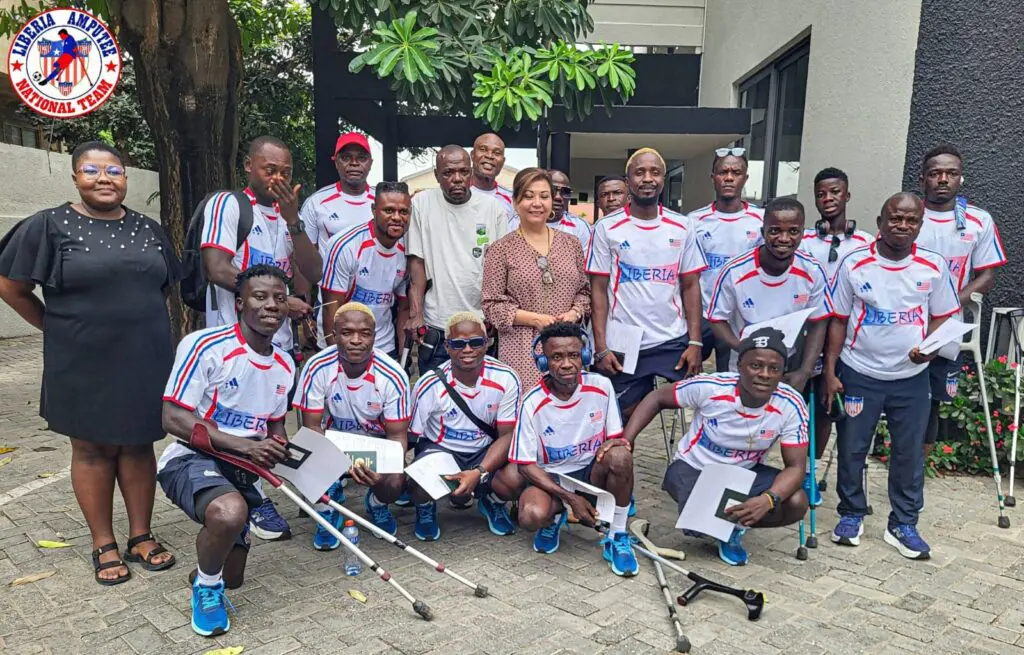
MONROVIA – Liberia’s failure to participate in the 2026 Amputee Football World Cup in Mexico is more than a visa setback.
It exposes serious shortcomings in planning, coordination and institutional accountability that have denied the country an opportunity earned on the football pitch.
The Lone Star Amputees were preparing for their second consecutive appearance at the global competition, scheduled for Nov. 13-22 in San Juan de los Lagos, Mexico.
However, their campaign ended before it began after the delegation failed to secure the required Spanish airport transit visas.
The team had successfully obtained Mexican visas, meaning the obstacle was not entry into the host country but a transit requirement that should have been addressed much earlier in the travel planning process.
The Ministry of Youth and Sports says the government committed more than $200,000 in financial and logistical support toward the team’s participation.
It also disclosed that approximately $100,000 was lost on nonrefundable airline tickets.
While the ministry has attributed the visa challenge to a late request from the Amputee Football Federation of Liberia, the circumstances point to institutional failures that extend beyond one organization.
A preventable travel crisis
The federation’s responsibility cannot be overlooked.
International competition requires more than securing qualification, preparing players and obtaining visas for the destination country. Travel routes, connecting airports, transit requirements and airline regulations are equally important.
Liberian passport holders require an airport transit visa when connecting through Spain, even when they do not intend to leave the airport’s international transit area.
The Spanish airport transit visa is different from a regular entry visa. It permits passengers to remain in the international transit area while waiting for connecting flights but does not authorize entry into Spanish territory.
Visa applications generally require advance preparation, with processing potentially taking about 15 days or longer, depending on individual circumstances and the workload of the consular authorities.
Given these requirements, the Spanish transit visa issue should have been identified during the initial travel planning, particularly for a delegation preparing for an international competition.
With more than two years of preparation following Liberia’s qualification, the failure to address the transit visa requirement raises serious concerns about the federation’s logistical planning.
More concerning is the reported purchase of nonrefundable airline tickets before all necessary travel requirements were resolved.
The central question is why the federation proceeded with the ticket purchases without first confirming that every member of the delegation could legally transit through the proposed route.
Government support is not enough
The Ministry of Youth and Sports deserves recognition for the financial commitment it says was made toward the team’s participation. However, providing funding should not be the only measure of government involvement in a national team’s international campaign.
The ministry maintains that technical preparations, travel planning and logistical arrangements fall primarily within the responsibility of national sports federations.
While that distinction is understandable, the government’s responsibility to ensure accountability for public funds cannot be separated from its financial support.
A commitment exceeding $200,000 should be accompanied by adequate monitoring, coordination and risk assessment.
If the government was financing the delegation’s participation, there should have been sufficient communication between the ministry and the federation to ensure that major travel requirements were addressed before tickets were purchased.
The ministry’s late request for assistance suggests a breakdown in communication. However, it also raises questions about the ministry’s oversight of the travel arrangements before the crisis emerged.
The failure should not be reduced to a disagreement over which institution was responsible for securing the Spanish transit visas. Both had responsibilities, and their coordination was clearly inadequate.
Was there an alternative?
Another question is whether the delegation’s travel arrangements could have been salvaged through an alternative route.
Some sports commentators believe the government and federation should have explored flights through airports where Liberian passengers would not require additional transit visas.
Such an option might have provided a last-minute solution, depending on flight availability, connections, costs and the time remaining before the competition.
However, the ministry’s statement does not explain whether it considered alternative routes or why it could not change the existing arrangements.
Although the late request may have significantly reduced options, the lack of a clear explanation of contingency planning leaves another important question unanswered.
A national team preparing for a major international competition should not depend on a single travel arrangement without considering possible disruptions.
The real cost of the failure
The reported loss of approximately $100,000 in nonrefundable airline tickets represents only part of the damage.
Liberia has also lost an opportunity to build on its progress in international amputee football, give its athletes another global platform and strengthen its presence in a competition where it previously demonstrated considerable potential.
At the 2022 Amputee Football World Cup, Liberia made an impressive debut, defeating Spain, Ireland and France before finishing 17th among 24 participating nations.
The team subsequently competed at the 2024 African Amputee Football Cup of Nations in Egypt, defeating Uganda and hosts Egypt to secure qualification for another World Cup.
Those achievements represented more than sporting results. They demonstrated the potential of Liberian athletes with disabilities to compete internationally and bring recognition to the country.
The players fulfilled their responsibility by earning qualification. Unfortunately, administrative and logistical shortcomings have denied them the opportunity to compete.
Beyond the blame game
The Ministry of Youth and Sports and the Amputee Football Federation must recognize that this failure reflects a broader institutional problem that requires more than public statements and shifting responsibility.
The federation must demonstrate greater professionalism in travel planning, logistical coordination and the management of international assignments. Government support must also be accompanied by stronger monitoring mechanisms to protect public resources and ensure that funded programmes achieve their intended objectives.
The incident should prompt a review of how national sports federations prepare for international competitions, particularly when government funding is involved.
Clear timelines for travel arrangements, early verification of visa requirements, proper scrutiny of ticket purchases and contingency plans for unforeseen challenges must become standard practice.
Ultimately, Liberia’s failure to reach Mexico is not simply a Spanish visa problem. It is a failure of preparation and coordination that has turned a sporting achievement into an administrative disappointment.
The government may have provided the funding, and the federation may have secured qualification, but neither achievement was enough to get the players to Mexico.
For the athletes who worked to earn their country’s place at the World Cup, that is perhaps the most painful part of this entire episode.



Discussion about this post