


Published: November 9, 2026
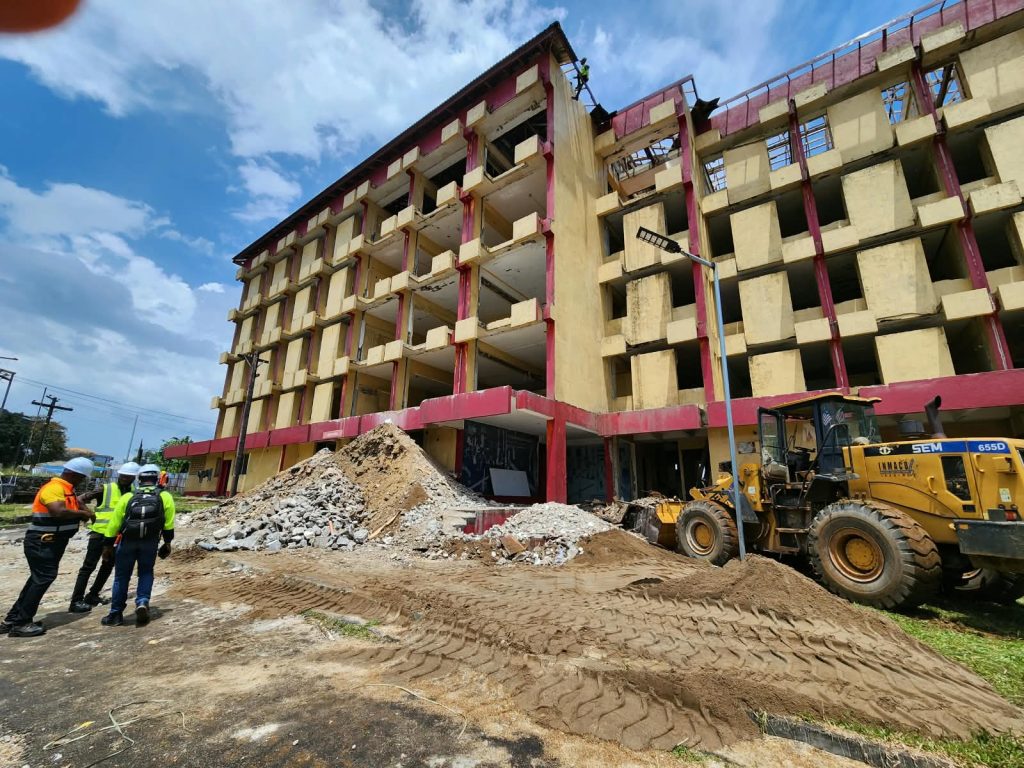
Major renovation, modernization, and beautification is currently underway at the University of Liberia, thanks to the generosity of the Liberian government, which has provided $6.35 million United States Dollars in the FY2026 for the purpose. The public has certainly noticed the activity of construction workers on UL’s Capitol Hill and Dogliotti campuses, and conceptual drawings for the “new look” of the buildings have circulated widely on social media. That being said, a number of questions and misconceptions have also made the rounds, so I decided to use today’s column as an explainer and, hopefully, to clear up some of the unknowns. So, here goes…
By Layli Maparyan, Ph.D.
QUESTION: All of the renovation seems to be at Capitol Hill and Dogliotti. What about Fendall and Sinje campuses? They badly need renovation, too!
ANSWER: All four (4) UL campuses are slated for renovation, modernization, and beautification (RMB). However, two things are important to know: First, RMB is going to be a phased, multi-year process. It will take two to three years to touch all of the campuses equally. This year is just the beginning. Second, we started with Capitol Hill and Dogliotti in response to His Excellency President Boakai’s directive back in August, which was to focus on Capitol Hill and UL’s medical school first. Why? Because Capitol Hill campus is the national “face” of UL and part of the seat of government by virtue of its location. Also, Liberia needs more doctors and health workers quickly, so improving the medical campus early will help us get there faster. It is important to know that, in line with this this directive, the Dogliotti pre-clinical campus at Fendall will get some attention this year, as will Straz-Sinje campus, which will get a major overhaul using FY2026 funds. Contractors will start on those two projects before the end of this month, and all projects started in 2026 will continue until March 2027 or so.
QUESTION: I’m only seeing two or three buildings getting fixed at Capitol Hill. What about all the other buildings?
ANSWER: We decided to start with the Graduate School Building, the Business College, and the Law School for several reasons. First, we are committed to full renovation, modernization, and beautification, which is more costly than the typical “new zinc and paint” facelift – and this means renovating fewer buildings at a time, but doing a more comprehensive job. As time goes on, Capitol Hill campus is becoming more of a locus for graduate and professional education, and the Graduate School Building emblematizes that. For so long, it was in the media as a symbol of how bad and ugly UL’s infrastructure was. To make it a sparkling example of the “New UL” became symbolic of the entire RMB process. The building is essentially being gutted and a new fit-for-purpose building is being constructed over the old, structurally sound shell. In addition to that, the surrounding grounds will be beautified. With regard to the Law School, the FY2026 renovation budget included a budgetary earmark for the Law School Building which is attached to the Graduate School Annex, therefore enabling us to prioritize both quickly. We added the Business School because it is a major classroom building that has historically hosted one of the largest majors at the university. Last but not least, we are constructing majestic new entrance gates and a new perimeter fence. Other buildings at Capitol Hill will be addressed in future years.
QUESTION: What about the AB Building, the Science Building, and the Engineering Building at Fendall? These are some of the most important and populous buildings, so why aren’t they being touched?
ANSWER: These buildings will be the centerpiece of next year’s RMB program. The AB Building is the biggest piece of real estate that UL has. Similarly, the Science Building and Engineering Building are huge and important. Renovation of these three together will revolutionize UL’s STEM operations, particularly since these buildings contain laboratories, which must also be renovated. UL is engaged in a separate but connected process to redesign and upgrade UL’s science laboratories to where they should be, and working on these all together makes practical sense. We will also upgrade labs at Sinje next year. We hope to also include the Agriculture and Fisheries campus at Fendall, although this will to some extent depend on the fiscal size of next year’s RMB envelope.
QUESTION: All these new buildings are great, but are we just going to put the old furniture back inside? That would defeat the purpose.
ANSWER: We understand that UL’s new buildings will need new furnishings. Fortunately, the Government of Liberia has also recognized this need and plans are underway to allocate some money specifically for furnishings. In fact, the beautification element includes not only furnishings, but other kinds of upgrades such as signage, landscaping, fencing, and parking lots. These elements are visible in the concept drawings for each building. Last but not least, we will increase the number of SMART classrooms, since this is an important part of modernization. Today’s educational environment must be digitally empowered, which is why upgrading electrical systems has been a huge part of the RMB effort.
QUESTION: How can school go on while renovation is taking place? At the same time, how can the education of thousands of students be delayed for years while renovation takes place? Students are “caught in the scissors”!
ANSWER: University campuses all over the world undertake renovation projects while keeping school in session, and UL is no different. There are no plans to keep students out of school because of renovation. The UL Administration has agreed to provide a combination of online education, on-campus education, and off-campus education to make sure that students can return to study as soon as the faculty-staff work-stoppage is resolved. While this will involve some adjustment on everyone’s part, there is no progress in life without a little sacrifice here and there, and we believe that today’s students are adaptable enough to adjust while this historic renovation takes place. In fact, this generation of students will forever be the “remember when…” generation associated with this generationally important transformation of the UL campuses takes place. You students will be a special part of this history and form part of our historical memory about these events!
QUESTION: In addition to renovating UL’s existing buildings, don’t we also need some new buildings? UL’s student population is always growing, our classrooms are jammed, and faculty need more and better offices. Not to mention, we need other kinds of buildings we don’t have yet, such as student and faculty centers, a graduation hall, a performing arts center, and sports facilities. How and when will we build those, and how will we pay for it?
ANSWER: UL’s five-year strategic plan includes the addition of a variety of types of new buildings and facilities, such as those named. In some cases, they may appear in future allocations from the Government, but in other cases, they will be the result of extramural fundraising. Already, alumni in the United States are raising money for a performance hall. We are in conversations with a few donors now about other kinds of facilities, although nothing is certain yet. However, the UL Administration believes that our RMB successes rooted in Government funding will inspire other donors to invest in UL, leading to opportunities to develop additional new buildings and facilities. Importantly, UL must continue working on its global image. Keeping a calm and continuously operational campus goes a long way in helping us do that.
QUESTION: When will next year’s renovation work start? We shouldn’t wait until the end of the year like we did this year.
ANSWER: We expect to start the FY2027 RMB activities during Q1, that is, between January and March, so that we can take advantage of the dry season weather at the beginning of the calendar year. If we are able to do this, it will maximize our ability to use all of the seasons to their best advantage in terms of the building work.
QUESTION: All these new buildings will be great, but if we don’t maintain them, they will just look bad again in a few years. How do you plan to keep them up?
ANSWER: It will take all of us to keep our new buildings nice. We must take pride in ownership and each do our part to care for them. Building maintenance will be a major priority of my administration, with deployments of personnel targeted for just such a purpose. Our Plant Operations Department (POD) will be in high gear, with specialized teams for bathroom maintenance, landscaping, and other specialized duties in addition to routine maintenance. We will also launch a new Sanitation Department with responsibility for trash cleanup and keeping our campuses hygienic and safe. But students, faculty, and administrators will each have their roles as well. Our whole community has to commit to loss prevention – that is, making sure theft and destruction of property do not occur. We also have to make it our campus culture to clean up after ourselves, picking up litter, keeping bathrooms clean, keeping desks and other furniture orderly and in pristine condition. We cannot just assume it is the next person’s job – it starts with us. We will have workshops and signage to drive these messages home and get everybody on board.
QUESTION: Anything else?
ANSWER: Yes, I would like to point out a number of new facilities at UL that are not part of the Government-funded RMB program but are equally important to the improvement of our campuses. First, a new classroom building is going up at the Dogliotti pre-clinical campus at Fendall, thanks to the generosity of the Global Fund via Catholic Relief Services. It is expected to be done by March 2027. Second, the Solar Oasis Student Utility Park, which will add over two dozen new bathrooms and a mini-student center at Fendall Campus, is expected to be complete next month, with an official handover from builder Xity Engineering Solutions (XES) early in 2027. Third, the new LUX Printing Press Building is complete and, thanks to the Chinese government, contains state of the art printing press machines. We are adding some additional equipment to make it a full-service graphic design facility and self-service copy center, and once that is done, we will also do a ribbon cutting in early 2027. Fourth, thanks to a partnership between ULSIL and the Ministry of Health, a new PHC-1 health clinic has been built at Capitol Hill Campus and will be handed over soon. All of these will be celebrated as UL 75th Anniversary accomplishments, so stay tuned!
Still have questions about UL’s renovation activity? Be sure to contact UL’s Office of Institutional Advancement, and we will keep the information coming to inform the public!




Discussion about this post