


Published: November 4, 2026
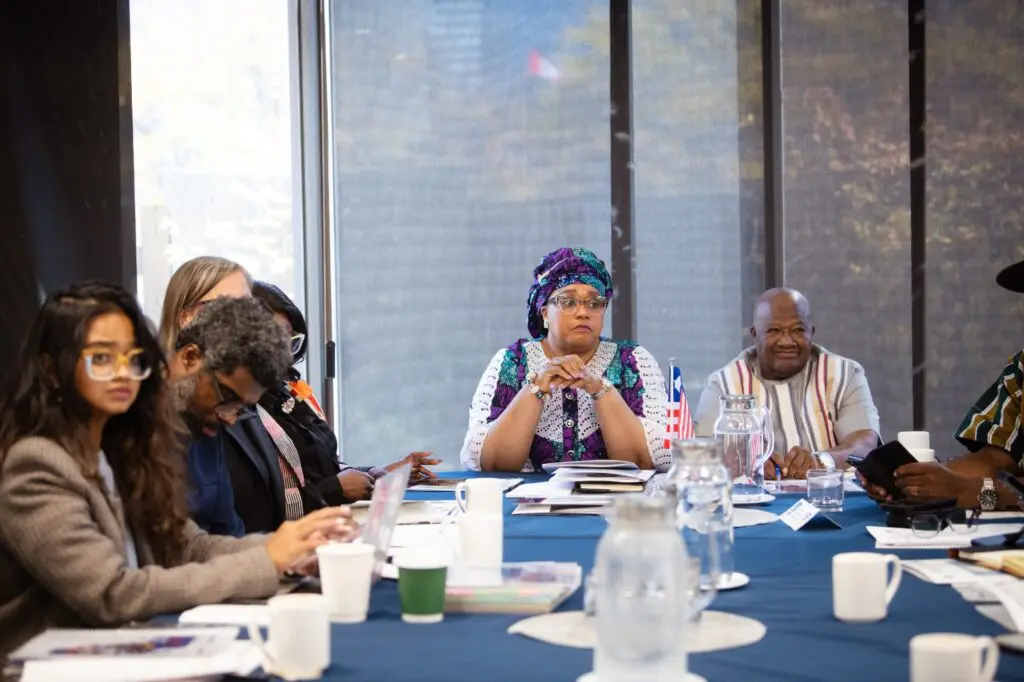
TORONTO, Canada — Canadian academic, private-sector, philanthropic, and diaspora representatives have requested 90 days to mobilize resources, engage additional institutions, and develop a coordinated response to Liberia’s education investment priorities following a high-level roundtable in Toronto.
The request came after Minister of Education Dr. Jarso Maley Jallah presented a comprehensive investment case that drew strong interest from participants, who commended the clarity and depth of her presentation on Liberia’s education system, national development priorities, and opportunities for collaboration.
Organized by the Liberia Trade and Investment Office in Canada, the Liberia–Canada Education Investment and Partnership Roundtable brought together representatives of universities, colleges, foundations, businesses, development institutions, and the Liberian diaspora. In her welcome remarks, Commissioner Jallahqueena Hawa. Konneh, Liberia’s Trade and Investment Representative to Canada, emphasized the importance of connecting Liberia’s education priorities with institutional expertise, responsible private-sector investment, and sustainable partnerships. “Our task today is to ask not only what Liberia needs, but what we can realistically build together,” she stated, underscoring the need for practical collaboration and clearly defined next steps.The engagement formed part of the Ministry of Education’s broader mission to expand international partnerships in support of Liberia’s education reforms.
Minister Jallah, who led the Liberian delegation alongside Prof. Augustine Konneh, Senior Advisor to the President, situated her presentation within the ARREST Agenda for Inclusive Development (2025–2029), making the case that Liberia’s economic transformation will depend heavily on the quality of education and skills available to its predominantly young population. Drawing on national education data, the Minister presented a candid assessment of the challenges facing a system serving more than 1.3 million learners. She highlighted persistent gaps in foundational literacy, teacher preparation, school infrastructure, instructional materials, and technical and vocational education.
The presentation also demonstrated the Government’s ongoing response to these challenges, including the transition of more than 2000 qualified volunteer teachers onto the national payroll, investments in foundational learning through the EXCEL Project, expanded school feeding, improvements in school infrastructure, digital learning initiatives, and the national campaign to return 250,000 out-of-school children to education. These investments provided the foundation for the Minister’s appeal to Canadian partners. Liberia presented defined national targets, established programs, and measurable needs, inviting institutions to contribute expertise and resources where they could make a meaningful difference.
To guide participation, the Ministry organized its investment case around five partnership windows: education infrastructure and school construction; higher education and institutional partnerships; TVET and workforce development; digital learning and innovation; and education financing, scholarships, and impact investment. The framework generated discussions across several areas, including university research and faculty development, teacher education, technical training, entrepreneurship, technology, and institutional financing.
Impressed by the presentation and the specificity of Liberia’s investment opportunities, participating partners offered to become advocates for the country’s education agenda. They asked Minister Jallah for 90 days to consolidate their networks, engage prospective Canadian partners and financiers, and develop a coordinated response around the five investment windows.
The proposed effort would bring together complementary contributions from universities, polytechnics, foundations, businesses, and diaspora networks, creating opportunities for joint resource mobilization and longer-term institutional collaboration.
The Roundtable followed other targeted engagements during the delegation’s Canada mission. At Mohawk College in Hamilton, Minister Jallah and the delegation held discussions on strengthening Liberia’s technical and vocational education system through instructor development, apprenticeship, employer participation, and pathways into employment.
In a separate meeting, Dr. Ken Singh of Atlas Cargo offered to lead an effort to mobilize approximately 100,000 books and hundreds of school chairs for Liberia. The initiative will require further coordination before mobilization and delivery arrangements are finalized.
The delegation also engaged GCG Global Forum on opportunities to connect higher education with entrepreneurship, workforce preparation, instructor development, and access to international markets. Discussions explored building on existing university relationships to develop practical learning opportunities that respond to Liberia’s economic needs.
Together, these engagements expanded the range of prospective contributions under consideration, while the Toronto Roundtable provided a broader platform for coordinating institutional interest.
The Liberia Trade and Investment Office in Canada played a central role in bringing these opportunities together, organizing the Roundtable and facilitating connections between the delegation and Canadian institutions, businesses, and investment networks.
With partners now seeking a 90-day period to consolidate their response, the Ministry will work with the Trade and Investment Office to review emerging proposals, identify institutional counterparts, and determine which opportunities are ready for technical discussions, resource mobilization, or formal agreements.
The next test of the Canada mission will be the progress made during that period, particularly whether the interest generated in Toronto develops into defined partnerships and tangible support for Liberia’s education system.



Discussion about this post