

Published: October 21, 2026
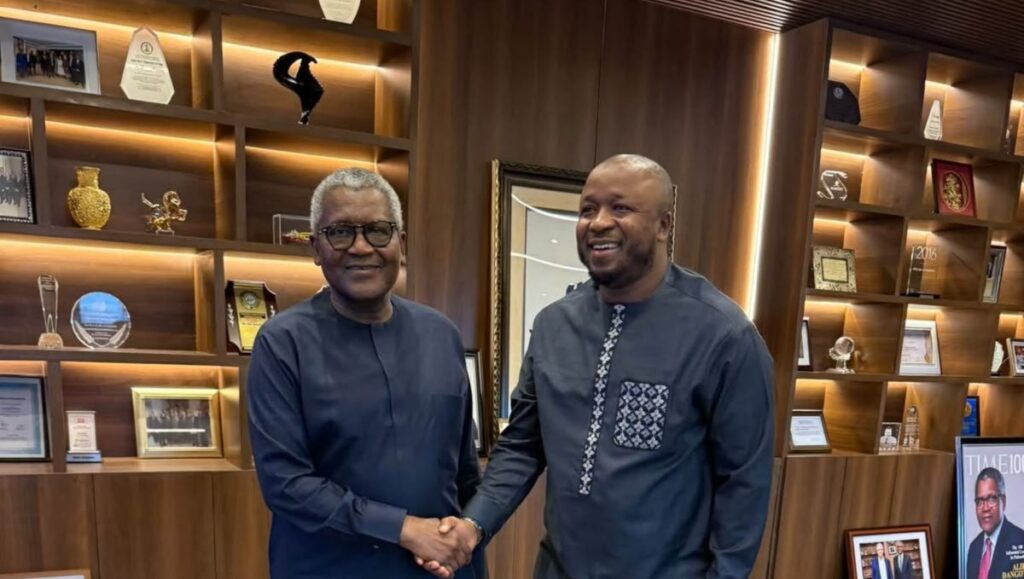
MONROVIA— Liberian businessman and petroleum sector stakeholder Morris Kamara met with Nigerian billionaire Aliko Dangote in Lagos, Nigeria, to discuss potential partnerships to strengthen Liberia’s petroleum supply, improve fuel availability, and expand investment opportunities in the country’s energy sector.
By Blamo N. Toe
Kamara, chief executive officer of Easy Oil and Gas, met with Dangote on Monday, Oct. 12, 2026, at the Nigerian industrialist’s office in Lagos, where they discussed opportunities for Liberia to benefit from the Dangote Petroleum Refinery, one of Africa’s largest petroleum processing facilities.
The engagement comes as Liberia seeks to strengthen its petroleum infrastructure, expand storage capacity and attract private investment to improve the reliability and affordability of petroleum products in the domestic market.
The Dangote Refinery, located in the Lekki Free Zone in Lagos, has a reported processing capacity of approximately 650,000 barrels of crude oil per day, positioning it as a major potential supplier of refined petroleum products to African markets.
Kamara’s engagement with Dangote focused on identifying possible commercial arrangements that could connect Liberia’s petroleum market with the refinery’s production and distribution network.
Although the meeting did not result in a formal supply agreement, the discussions could lay the groundwork for future cooperation between Liberian petroleum businesses and the Dangote Group.
Kamara highlighted Liberia’s ongoing efforts to modernize its petroleum infrastructure under President Joseph Nyuma Boakai’s administration, particularly initiatives being undertaken by the Liberia Petroleum Refining Company (LPRC).
He pointed to the leadership of LPRC Managing Director Amos Tweh, whose administration has prioritized expanding petroleum storage capacity, improving infrastructure and encouraging private-sector participation in the industry.
According to Kamara, strengthening Liberia’s petroleum storage and distribution systems could create a more favorable investment environment and position the country to participate more effectively in the growing West African petroleum market.
He maintained that improved infrastructure, combined with strategic commercial partnerships, could diversify petroleum supply sources and strengthen the country’s energy security.
The Liberian businessman also expressed appreciation for the infrastructure development and reforms the LPRC management is pursuing, describing them as important to creating opportunities for private-sector investment.
Kamara emphasized that collaboration between government institutions and petroleum businesses remains essential to improving supply reliability and supporting the sector’s long-term development.
The meeting also comes amid growing interest among West African countries in sourcing refined petroleum products from within the region rather than relying exclusively on supplies from markets outside Africa.
For Liberia, access to petroleum products from the Dangote Refinery could provide an additional regional supply option, although any impact on domestic fuel prices would depend on commercial terms, transportation costs, taxes, distribution expenses, and other market conditions.
Kamara expressed optimism that continued engagement with Dangote and other regional investors could create commercial opportunities that support the availability and affordability of petroleum for Liberian consumers.
He reaffirmed his commitment to working with government institutions and private-sector stakeholders to attract investment and strengthen Liberia’s petroleum industry.
The Easy Oil and Gas chief executive also underscored the importance of expanding business relationships between Liberian entrepreneurs and major African industrial investors.
He said such engagements could support broader economic cooperation, encourage investment, and create opportunities for Liberian businesses to participate in regional petroleum trade.
Dangote, whose business interests span petroleum refining, cement manufacturing, and other industries, has expanded his group’s involvement in Africa’s energy sector by developing the Lagos refinery.
The facility is expected to play an increasingly important role in regional petroleum supply as African countries seek to strengthen energy security and reduce dependence on imported refined products from outside the continent.





Discussion about this post