


Published: October 16, 2026
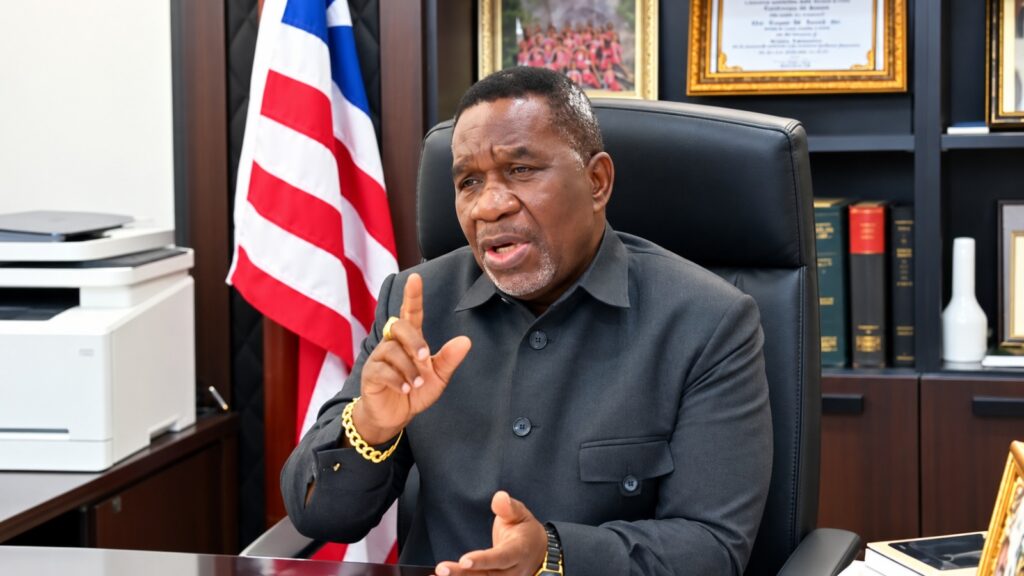
MONROVIA – Liberia’s climb off the U.S. trafficking watch list followed new convictions in three counties, including a Montserrado case with 57 victims, but the government still lacks the money to send some trafficking victims home, Labour Minister Cooper Kruah said Wednesday.
Kruah told a government press briefing at the Ministerial Complex in Congo Town that the convictions, along with other government interventions, moved Liberia from the Tier 2 Watch List to Tier 2 in the State Department’s 2026 Trafficking in Persons Report. The government now wants Tier 1, the top ranking, he said.
“We are glad Liberia is off the Tier Two Watch List. We are now on Tier Two, and we hope that during the course of this year, we will move from Tier Two to Tier One. That will be our goal for this year,” Kruah said.
Tier 2 means a government does not fully meet the minimum standards for eliminating trafficking but is making significant efforts to do so. Tier 1 countries fully meet those standards.
Kruah said the earlier watch-list placement reflected trafficking cases that went to court without convictions.
“About a year ago, there were cases of trafficking in Liberia that went to court, but there were no convictions at that time. The government was downgraded to Tier Two Watch List,” he said.
The State Department moved Liberia to the watch list in its 2024 report and kept it there in 2025.
Kruah said Montserrado County alone produced three trafficking convictions.
“In Montserrado alone, we had three different trials and three different convictions. In fact, one of the cases handled in Montserrado had a total of 57 victims who were brought before the court to testify against the traffickers,” he said.
About 11 people were implicated in that case, and Kruah said those convicted were sentenced to 20 years in prison. He did not say how many of the 11 were convicted or whether all received the same sentence.
He also cited convictions in Grand Gedeh County, including a case involving a Nigerian national, and in Grand Cape Mount County, but gave no details.
Kruah said victim assistance remains the weak point.
“We are supposed not just to keep victims, but to get people out of these trafficking situations and repatriate them to Liberia or other countries,” he said. “We have done that. Last year, we repatriated some people, but some people here still need to be repatriated. We are looking for money to do so.”
He said his ministry has repeatedly raised inadequate anti-trafficking allocations and hopes the coming national budget will provide more.
“The report talked about the need to support this program. This ministry needs to be supported. We cannot do it just by talking; we have to do it through funding from the government,” Kruah said.
He credited last year’s support from the Ministry of Finance and Development Planning, as well as the Ministry of Gender, Children and Social Protection, with the progress.
Kruah said the ministry plans to train more labour inspectors to identify trafficking and deploy some to border communities. He said the government has launched a National Action Plan on Trafficking in Persons to coordinate prevention, prosecution and victim protection.






Discussion about this post