


Published: October 14, 2026
MONROVIA — The National Public Health Institute of Liberia (NPHIL) has announced plans to convene local and international scientists for a three-day conference in November to address emerging public health threats, as the government intensifies Ebola surveillance at major entry points following reports of a case in Kenya.
By Roseline Gbessagee
The conference, scheduled for Nov. 12-14, 2026, at the Kenyatta University Ministry Complex in Monrovia, is expected to bring together scientists, researchers, public health professionals, policymakers, academics, development partners and students to discuss scientific discoveries, disease prevention and innovative approaches to strengthening Liberia’s health security.
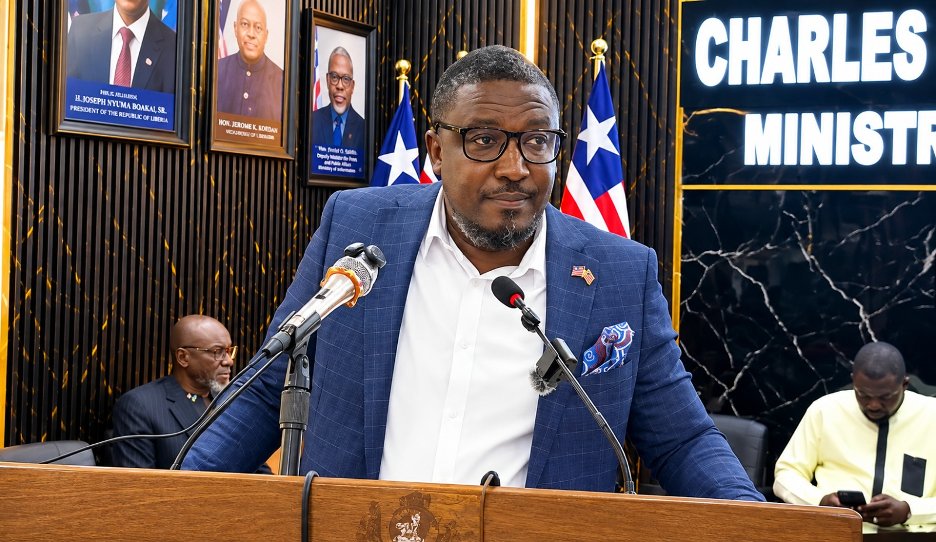
Deputy Information Minister for Press and Public Affairs Daniel O. Sando made the disclosure Tuesday, Oct. 13, during the Ministry of Information’s regular press briefing in Monrovia.
According to Sando, the gathering, described as the fifth edition of NPHIL’s 10th Annual National Scientific Conference, will be held under the theme, “Strengthening Health Security in Liberia through Research and Innovation.”
“The conference will be held under the theme, “Strengthening Health Security in Liberia through Research and Innovation,” highlighting the importance of scientific research, innovation, and evidence-based decision-making in preventing, detecting, and responding to public health threats,” he said.
Sando said the conference aims to strengthen collaboration among health institutions, promote scientific research, and encourage evidence-based decision-making to address Liberia’s public health challenges.
He disclosed that several prominent African public health experts are expected to participate, including Dr. Togo Weh, former director general of NPHIL and former director of Epidemic Prevention, Preparedness and Response at the Africa Centres for Disease Control and Prevention (Africa CDC).
Other expected speakers include Professor Foday Sahr, executive director of the National Public Health Institute of Sierra Leone, and Dr. Pablos V. Kazura, a senior epidemiologist with the Africa Field Epidemiology Network.
Their participation, according to Sando, is expected to contribute to discussions on public health leadership, regional cooperation, disease surveillance, outbreak preparedness and research-driven approaches to strengthening health security across West Africa.
“The conference will also provide a platform for researchers to present their work, share experiences, identify emerging health threats, and develop recommendations to strengthen national and regional public health systems,” Sando added.
The deputy minister said the annual scientific gathering honors the late Dr. Emmett K. Dennis, a distinguished Liberian scientist and former president of the University of Liberia.
“It recognizes the role of scientific research in national development and public health advancement,” he said.
Sando further disclosed that organizers have extended invitations to researchers, health practitioners, students, development partners, media professionals and other stakeholders to participate in the discussions.
“Organizers have invited researchers, public health practitioners, students, development partners, media professionals, and other stakeholders to participate in discussions aimed at strengthening Liberia’s public health system,” he said.
Meanwhile, the Ministry of Health and NPHIL have announced intensified Ebola surveillance, preparedness and preventive measures across Liberia following reports of an Ebola virus disease case involving a traveler who reportedly arrived in Kenya from the Democratic Republic of Congo (DRC).
Sando disclosed that the reported case involved a Kenyan citizen who had lived in the DRC for approximately seven years before traveling through Uganda to Nairobi, Kenya.
“According to the health authorities, the case involved a Kenyan citizen who had reportedly resided in the Democratic Republic of Congo (DRC) for approximately seven years,” he said.
“The individual traveled from the DRC through Uganda to Nairobi, Kenya, where he tested positive for Ebola virus disease and subsequently died.”
According to Sando, Kenyan health authorities initiated a 21-day isolation and monitoring period for 28 close contacts and 23 passengers who reportedly traveled on the same flight as the individual.
He said the measures were being implemented in accordance with national and international public health protocols intended to prevent further transmission of the disease.
“In response to the regional situation, the Liberian government, through the Ministry of Health and NPHIL, is strengthening surveillance and preventive measures at airports, land border crossings, and seaports,” Sando noted.
The deputy minister explained that the measures align with the International Health Regulations and Liberia’s national standard operating procedures for points of entry.
He said health authorities have urged travelers entering the country to cooperate with screening personnel and provide accurate information concerning their health status, recent travel history, and possible exposure to infected individuals.
“The health authorities have urged all travelers to cooperate with health workers and provide accurate information about their health status, recent travel history, and any direct contact with an ill person,” he said.
Sando further explained that Ebola virus disease can spread through direct contact with the blood or other bodily fluids of an infected person, as well as through contact with contaminated surfaces or infected animals.






Discussion about this post