


Published: October 12, 2026
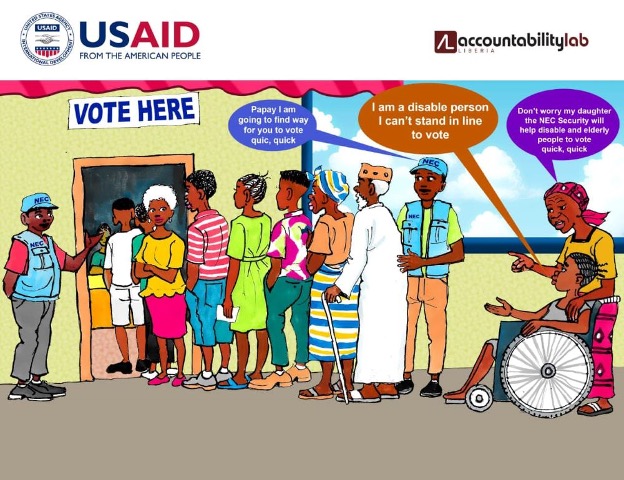
As Liberia prepares for the 2029 General Elections, the integrity of the democratic process will depend heavily on civil society’s strength. For an election to be robust, the government’s structural readiness must be matched by voter literacy and neutral, public-driven civic infrastructure.
By Joel Maybury, Contributing Writer
To achieve this, Liberia’s civil society should consider establishing a dedicated, nonpartisan civic institution. While Liberian advocates would ultimately decide the structure and name of such an entity, global democratic models are worth examining.
A Legacy of Non-Partisanship and Autonomy
One of the oldest blueprints for this work is the League of Women Voters (LWV) in the United States. Established over a century ago, it has endured because of its foundational mandate: absolute non-partisanship and strict institutional independence. To be clear, it does not endorse, support, or oppose any political party or candidate, focusing instead entirely on voter awareness.
In a political climate like Liberia’s—marked by intense partisanship and personality-driven politics—an impartial, structured voter education body could serve as a powerful stabilizing force.
For such an organization to win public trust, it must exist as an autonomous civil society organization, requiring no approval, oversight, or mandate from the National Elections Commission (NEC).
Such an organization can fill a critical void in the current electoral landscape by focusing on two core areas:
- Objective Civic and Voter Education (CVE): Producing neutral candidate profiles, fact-sheets on policy platforms, and clear explanations of voting rights, helping citizens vote based on policy rather than patronage.
- Evidence-Based Policy Advocacy: Providing a neutral platform to lobby for transparent governance, electoral law compliance, and inclusive representation based on research and national interest.
Global Flavor: Diversifying the Blueprint
Liberia can look to modern, highly successful models within the wider Global South.
In Nigeria, Yiaga Africa is a well-respected example of an independent, nonpartisan civil society organization. Yiaga runs extensive, year-round voter education campaigns, utilizing traditional grassroots strategies like community town halls alongside modern multimedia toolkits to combat political polarization.
Similarly, the Association for Democratic Reforms (ADR) in India provides a masterclass in data-driven voter education. ADR independently compiles and publishes the financial, educational, and background profiles of political candidates on open-access platforms. This empowers citizens with hard facts before they enter the polling booth, shifting the public discourse away from political rhetoric and toward concrete accountability.
Leveraging Diplomatic and Cross-Border Exchange
Does all this resonate with you? To be sure, translating these global models into a solid Liberian institution will require rigorous research into their operational mechanics. Liberian civil society and the Liberian diaspora could initiate formal dialogues with the executive leadership of the League of Women Voters in the United States.
They could also mobilize to participate in study sessions with both the American LWV and regional peers like Yiaga Africa. Understanding how these organizations protect their funding from partisan movements, create data-driven voter guides, and organize their operations will provide invaluable technical lessons for building a resilient counterpart in Liberia.
Decentralization and National Trust
To be inclusive, a Liberian nonpartisan civic entity must avoid the trap of being a Monrovia-centric entity. It should develop a decentralized infrastructure spanning all 15 counties, leveraging community town halls and vernacular radio to reach rural constituencies. Additionally, organizers must establish strict internal governance rules ensuring that the entity’s leadership is insulated from partisan politics and government influence.
Having said all this, it is important to acknowledge that electoral integrity is not achieved overnight. By investing in a permanent, autonomous voter education institution today, Liberian civil society can ensure a more informed electorate and a more resilient democracy when 2029 arrives.





Discussion about this post