


Published: September 28, 2026
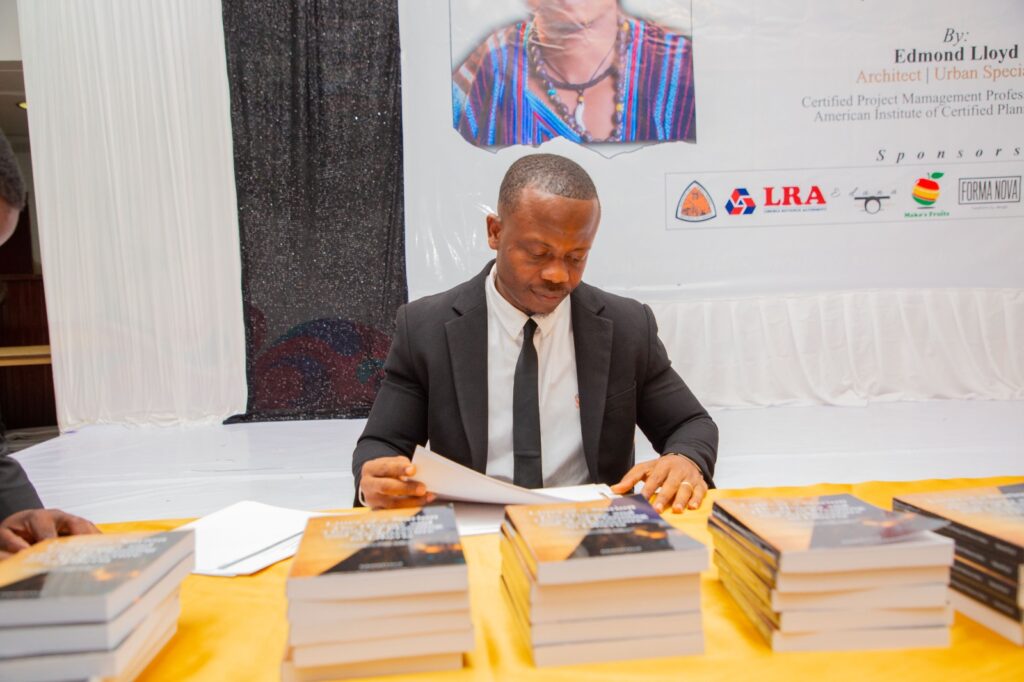
MONROVIA – Liberia’s cities are failing slowly, through mismanaged land, ignored drainage and unenforced building standards. Architect and urban planner Edmond Lloyd made that warning as he launched a book tracing the country’s planning and architectural history from Providence Island to its modern cities.
“A city does not fail in one day. A city fails slowly; when land is mismanaged, when drainage is ignored, when wetlands are occupied without control, when roads are built without sidewalks, when public spaces disappear, when building standards are not enforced, and when communities grow without services,” Lloyd said.
The launch of “Lines of a Nation: The History and Theory of Planning and Architecture in Liberia” at Monrovia City Hall drew government officials, development partners, academics, students and professionals from architecture, planning and engineering. It was held under the theme “Reimagining Liberia’s Built Environment: The Role of Government, Professionals, Universities, and Citizens.” The event became a public debate on how the country plans, builds and governs its cities.
Lloyd said the book grew from one conviction: “Liberia has a spatial story, and that story must be told.” He said Liberia’s history is written in politics and elections, and also in its streets, settlements, markets, coastlines, wetlands, ports and homes.
The book examines Liberia’s development from indigenous landscapes to modern urban growth. It addresses land governance, informal settlements, public buildings, infrastructure, environmental management and national identity.
Panelists at the launch said no single institution can fix Liberia’s urban problems. They called for closer coordination among the Ministry of Local Government, the Ministry of Public Works, the Monrovia City Corporation, the Paynesville City Corporation, the Liberia Land Authority, the Environmental Protection Agency, professional bodies, universities, the private sector and communities.
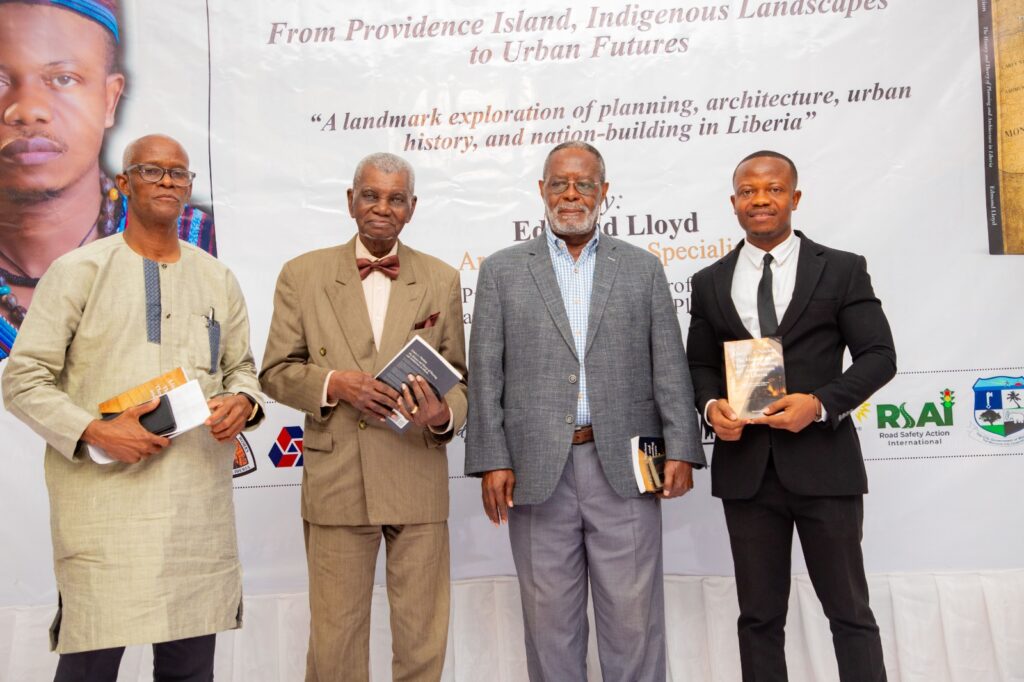
Speakers also urged universities to teach more Liberian content in architecture, planning, engineering, environmental science and land administration. They said students should learn the country’s own settlement patterns, planning history and architecture rather than relying only on foreign examples.
Participants said lasting improvement requires both policy reform and practical action on land use planning, zoning, development control, cadastral systems and drainage.
Five Liberian architects were honored at the launch for their contributions to the country’s built environment:
- Anthony Wolo, recognized for the Sinkor Place Hotel, opposite Bethel Cathedral of Hope in Congo Town
- Sylvannus O’Connor, for the Liberia Revenue Authority building at ELWA Junction
- Joseph A. H. Jones, for the International Aluminium Factory building on Fifth Street, Tubman Boulevard
- Robert Gray, credited with designing the President Samuel K. Doe Mansion in Grand Gedeh County
- Alexander Massey, for the remodeling design of the OAU terminal at Roberts International Airport
Sara Kauffman, public affairs officer at the U.S. Embassy in Monrovia, congratulated Lloyd. She spoke about the competitive Hubert H. Humphrey Fellowship, which Lloyd completed at the Massachusetts Institute of Technology’s Special Program for Urban and Regional Planning. She said the embassy was proud of his achievement.
Lloyd’s daughter, Edana Lloyd, introduced him. She said her father taught his family that education is not only for personal success but for helping others and giving back to the country.
A spoken word performance built on the book’s central image of “lines”: lines on maps, lines of history, lines of streets, lines of struggle and lines of hope.
Lloyd closed his presentation by introducing his ongoing research, “Planning from Below.” The research argues that people who live in a city every day must help shape its future. He said residents of informal settlements know where drainage fails, where flooding occurs, where children cross dangerous roads and how land is negotiated on the ground. He said professional planning must connect that knowledge to state standards.
“Planning from Below does not reject government planning,” Lloyd said. “It strengthens it. It says that national policy must meet local reality. It says that professional knowledge must listen to community knowledge. It asks us to plan with the poor, not around them.”
He called on Liberia to draw new lines, “not lines of division, but lines of dignity; not lines of exclusion, but lines of belonging; not lines of disorder, but lines of planning, justice, resilience, and hope.”
Lloyd holds a master’s degree in urban and regional planning, a master’s degree in environmental science and a bachelor’s degree in building construction technology with an emphasis in architecture. He is a certified project management professional and a member of the American Institute of Certified Planners. His research covers unplanned settlements, wetlands, peri-urban development, coastal erosion and climate risk.






Discussion about this post