


Published: September 25, 2026
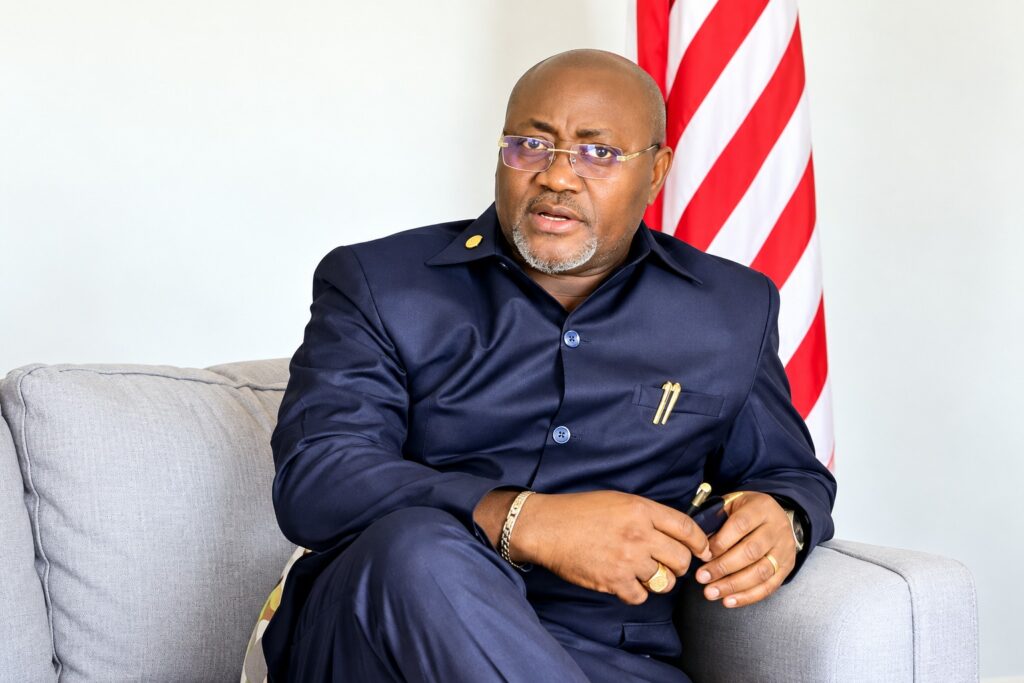
NEW YORK, USA — Liberia warns that a rapid global transition away from fossil fuels in international shipping could drive up freight and commodity costs, worsen food insecurity, and place severe economic pressure on African and other developing countries unless the International Maritime Organization carefully considers the consequences before implementing its Net-Zero Framework.
By Blamo N. Toe
Liberia’s Permanent Representative to the International Maritime Organization, Robert Kpadeh, sounded the warning Thursday during a special interview with OK TV in New York, USA, where Liberian officials have been making the case for what they describe as a more just and equitable pathway toward reducing emissions from global shipping.
Kpadeh stressed that Liberia is not opposing the IMO’s efforts to reduce greenhouse gas emissions or the broader transition toward cleaner alternative fuels. Instead, he said the country is pushing for comprehensive economic impact studies and a phased approach that accounts for the heavy dependence of African countries, least developed countries and small island developing states on maritime trade.
“What Liberia is saying is that this cannot be a quick-fix decision. This cannot be an abrupt decision. It has to be studied properly,” Kpadeh said.
He argued that moving too quickly, without fully determining the availability, affordability, and commercial viability of alternative fuels, could have consequences extending far beyond the shipping industry.
For Liberia, Kpadeh said, the stakes are particularly high because the country depends heavily on ships for rice, petroleum and other essential commodities while also deriving significant economic benefits from its international ship registry.
“Everything we do in Liberia, from rice to petroleum to commodities, comes into our country,” he said. “So, we are a shipping country.”
Kpadeh warned that higher shipping and freight costs could eventually reach ordinary citizens through increased commodity prices and greater pressure on food security, while weakening governments’ ability to invest in schools, roads, health care and other essential infrastructure.
He said Liberia is therefore urging IMO member states to ensure that efforts to confront climate change do not create another economic crisis for countries already struggling with development challenges.
“You want to balance the transition,” Kpadeh said. “You want to be sensitive to reducing the threat of climate change, but also you don’t want to do it at the expense of poor countries, at the expense of developing countries, at the expense of struggling people.”
Liberia is instead advocating a step-by-step transition that Kpadeh said could still achieve the international community’s emissions-reduction objectives without unnecessarily disrupting economies heavily dependent on maritime trade.
“We can still get to what we want to get to,” he said, “but we cannot just rush there.”






Discussion about this post