


Published: August 3, 2026
MONROVIA – Sweden’s ambassador to Liberia called on the Legislature to permanently outlaw harmful traditional practices on Saturday, two weeks before the government intends to lift the moratorium that has restricted female genital mutilation since 2022.
“We must work with the Legislature to enact and enforce laws that permanently ban harmful traditional practices in Liberia,” Ambassador Karl Backéus said at a cultural festival organized by ActionAid Liberia, which Sweden has funded since 2019. He said community-level work on women’s rights and on sexual and reproductive health must continue, but that legislation is the second front and that the two cannot be separated.
He did not name female genital mutilation. In Liberian usage the phrase he used refers principally to the practice, carried out on girls and women within the Sande society by traditional practitioners known as zoes.
Nyumalin said the ban would be lifted on Aug. 15 once new regulations and rules are in place, and that the council of chiefs and elders would convene as the national body of the traditional governing system, make the contents of the document public and then lift the ban. He made the announcement while standing in as launcher for an annex of Lofa Community College in New Breed community, Fissebu, Zorzor District.
Liberia has never criminalized the practice. It remains among the few African countries without legislation prohibiting FGM, despite having signed and ratified human rights instruments that condemn it, including the Maputo Protocol. What exists instead is a sequence of undertakings by traditional authorities. The Ganta Declaration suspended the practice for one year in 2019, and a further three-year suspension ran from 2022 to 2025. On Feb. 6, 2023, at Sonkay Town in Montserrado County, National Council of Chiefs and Elders Chairman Chief Zanzan Karwor declared the practice banned nationwide, saying that by the power vested in him as chairman of the traditional chiefs in all 15 counties, FGM was banned in the country. Violations continued after that declaration.Equality Now has noted that the Liberian government licenses the zoes who perform the practice, through the Ministry of Internal Affairs and the National Traditional Council, and that although the practice can in principle be prosecuted under a general provision on unlawfully injuring another person by cutting off part of the body, no one has ever been convicted under it.
A permanent statute has been before the Legislature since last year. President Joseph Boakai sent legislation to lawmakers that would prohibit the practice permanently, and it has met strong resistance from traditional groups and from some members of the House, one of whom asked why homosexuality, transgender people and tattoos are not called harmful instead of Liberian culture. Moima Briggs Mensah, who chairs the House Committee on Gender Equity, Child Development and Social Services, has described a proposed compromise under which bush schools would continue to operate provided they do not perform the practice, an approach she calls initiation without mutilation.
Backéus said gender equality and sexual and reproductive health and rights sit at the center of Swedish foreign policy. “We do so because we know that when women are empowered and their rights are respected, children are more likely to attend school, families become stronger, and societies become more prosperous,” he said.
ActionAid Liberia Country Director Elizabeth G. Johnson said the campaign against harmful practices met resistance and limited awareness in its early years. “Change is happening because voices were raised and action was sustained,” she said. She thanked the Swedish International Development Cooperation Agency for its support.
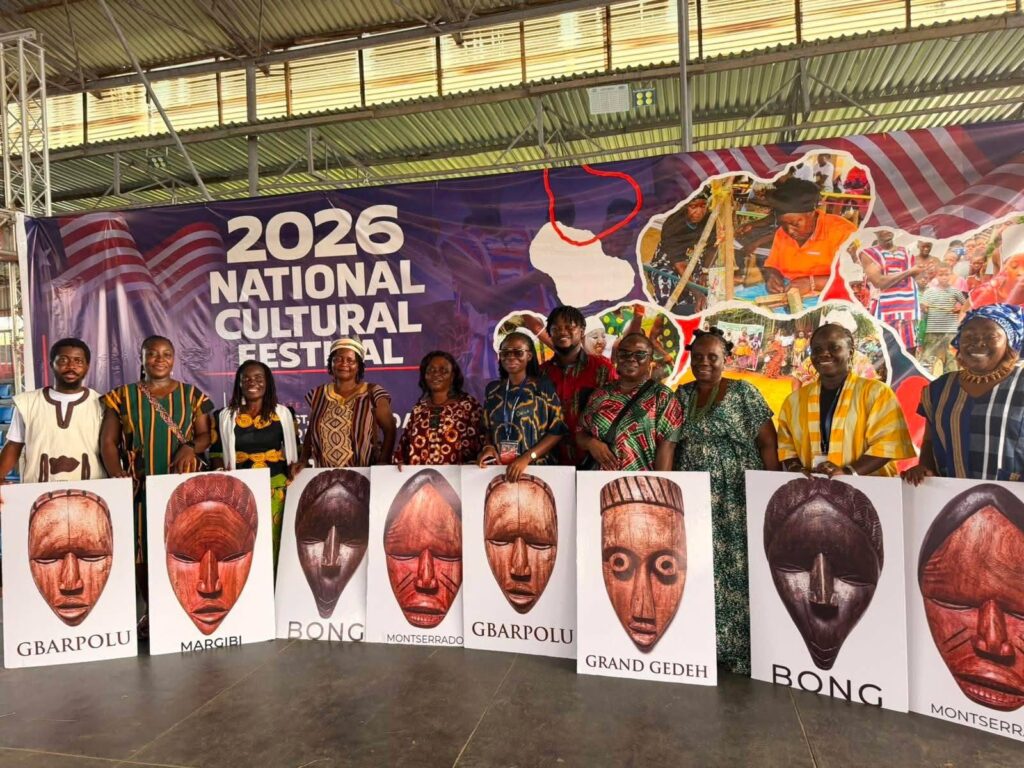
The remarks came at ActionAid’s third National Cultural Festival, held at the Samuel K. Doe Sports Complex gymnasium in Paynesville under the theme “Our Culture, Our Pride: Empowering Women and Girls,” with participants from Bong, Gbarpolu, Grand Gedeh and Montserrado counties.
Gbarpolu County Superintendent Sam K. Zinnah, the event’s orator, told the gathering that culture should be lived rather than displayed once a year. “Our culture and heritage should not be limited to the clothes we wear, the dances we perform, or the songs we sing once a year,” he said. “We should live our culture every day. We must protect our identity, preserve our heritage, and responsibly manage the resources with which our country has been blessed.”
Montserrado County Superintendent Whroway Bryant said Liberians should commit to preserving the positive aspects of their heritage while pursuing development. Neither superintendent addressed the ambassador’s call for legislation, and neither was asked about the planned lifting of the ban.






Discussion about this post