


Published: July 17, 2026
MONROVIA — Liberia’s landmark Land Rights Act risks failing the millions of rural citizens it was written to protect unless implementation is dramatically accelerated, government officials, lawmakers, civil society groups and development partners warned Wednesday, eight years after the law’s historic passage.
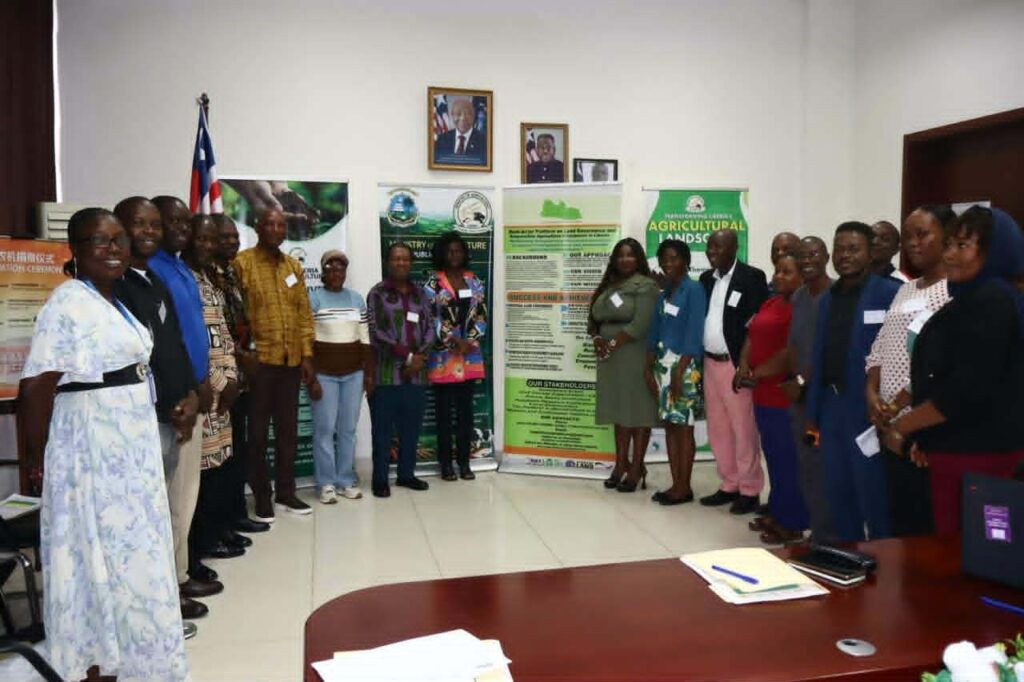
The warning came at a national advocacy dialogue at the Ministry of Agriculture, organized by the MAP Liberia Land Platform, the Sustainable Development Institute and partners, where participants called for greater political commitment, increased funding and stronger institutional coordination to safeguard one of the country’s most consequential postwar reforms.
The numbers presented at the forum illustrate both the law’s promise and its lag. Rights and Rice Foundation Executive Director James Yarsiah said 70 customary communities have completed the legal process to obtain land deeds under the act, with 150 more undergoing formalization, efforts expected to benefit more than 1 million rural Liberians. Customary landowners make up more than 60% of the population.
The 2018 law was hailed as a watershed because it legally recognized customary land ownership for the first time, giving millions of Liberians a path to secure rights over ancestral lands that had historically lacked formal protection. Land has long ranked among the country’s most contentious governance issues, with overlapping claims, weak administration and unresolved disputes fueling community tensions, undermining investment and contributing to conflict in rural and urban areas alike.
Yarsiah, whose organization was part of the nearly two decades of consultations that produced the law, said secure customary tenure goes beyond ownership, protecting livelihoods, promoting responsible investment and ensuring communities can shape decisions affecting their land. But he acknowledged that limited resources, inadequate public awareness and institutional capacity constraints have slowed the pace of community land formalization.
Representing the Ministry of Agriculture, Director of Statistics Kollie Dogba said secure tenure remains a pillar of the government’s agricultural transformation agenda, arguing that farmers invest in expanding production when they are confident their rights are legally protected. He said secure ownership supports national planning, strengthens food security and advances gender equity by improving women’s access to land and encouraging their participation in agriculture.
Josephine Karnu, representing Sen. Simeon Taylor, chairman of the Senate Committee on Lands, Mines, Energy, Natural Resources and Environment, reaffirmed the Legislature’s commitment to supporting implementation through oversight and legislative engagement. She called the act a landmark achievement for equitable land governance but cautioned that legal reform alone cannot resolve Liberia’s longstanding disputes, warning that unresolved land conflicts continue to threaten peace, discourage investment and undermine development in several parts of the country.
“Addressing these challenges demands practical solutions and sustained cooperation among all stakeholders,” Karnu said, urging land administration institutions to intensify public education and strengthen dispute resolution mechanisms before conflicts escalate into violence.
The dialogue also saw the launch of a policy brief, “Defending Land, Protecting Rights: Safeguarding Liberia’s Land Rights Act (2018),” which examined progress since enactment and outlined persistent gaps. It called for increased government financing, stronger institutional capacity, enhanced community engagement and sustained political support.
Participants concluded that the act’s ultimate success will depend not on the legislation itself but on Liberia’s ability to fully implement its provisions and deliver the protections the law guarantees to rural communities.





Discussion about this post