


Published: July 15, 2026
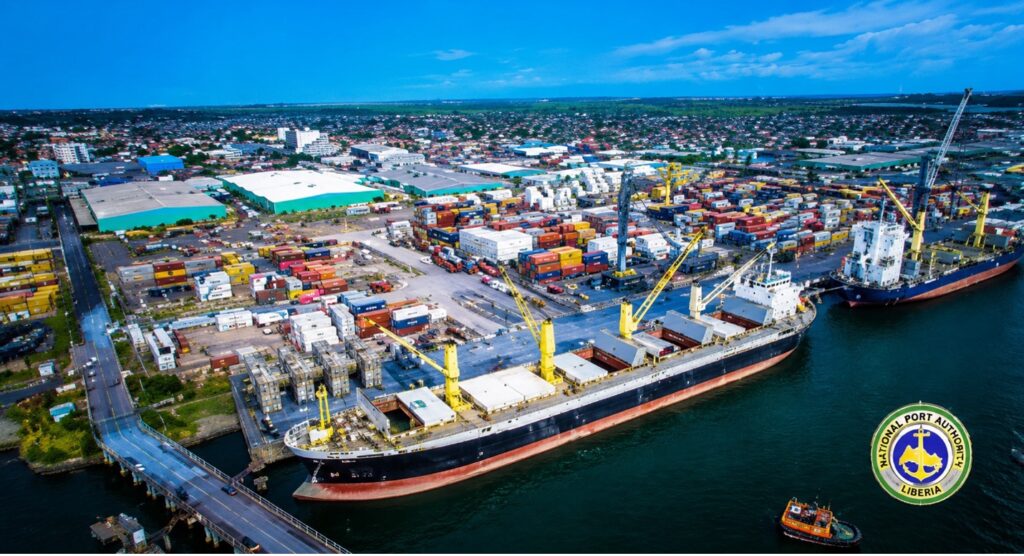
CAPITOL HILL, Monrovia — Liberia’s most contested maritime overhaul is headed back to President Joseph Nyuma Boakai’s desk after the House of Representatives on Tuesday concurred with the Senate on a revised three-bill port reform package, brushing aside objections from lawmakers who said the legislation reached the floor without a promised public hearing.
The concurrence completes legislative action on the revised measures nearly a year after Boakai vetoed an earlier version over legal and institutional concerns, setting the stage for another executive review of one of the country’s most consequential governance reform packages.
The package comprises an act amending the statutory functions of the Liberia Petroleum Refining Company; an act repealing Chapter 6 of Title 30 of the Public Authorities Law establishing the National Port Authority and replacing it with a new legal framework providing for the creation and modernization of autonomous sea and inland ports; and an act establishing the National Ports Regulatory Commission of Liberia.
The measures were passed by the Senate on March 10, 2026, and transmitted to the House through a communication signed by Senate Secretary J. Nanborlor F. Singbeh, requesting the House’s timely concurrence.
During Tuesday’s sitting, the chief clerk read both the Senate’s communication and the report of the House Joint Committee on Maritime, Judiciary and State-Owned Enterprises, which recommended concurrence. According to the joint committee, the proposed legislation seeks to modernize Liberia’s port governance framework by decentralizing the management of sea and inland ports while establishing an independent regulatory body to oversee the sector.
“The committee, having reviewed the Senate’s action and the merits of the proposed legislation, recommends that the House of Representatives concur with the Liberian Senate,” the report states.
Relying on the committee’s recommendation, Grand Gedeh County Electoral District No. 1 Rep. Jeremiah G. Sokan Sr. moved that the House concur with the Senate and transmit the legislation to the Executive for constitutional action.
“Given the importance and relevance of this bill to our economy and country, should, without hesitation and reservation, concur with the Senate on this bill and send it forward for the next action to the Executive for approval and publication into law,” Sokan told plenary.
He described the reform package as “a positive development for the country,” arguing that modernizing Liberia’s port governance system would strengthen the economy and improve the management of the country’s maritime infrastructure.
The motion immediately sparked debate as several lawmakers questioned whether the joint committee had completed all the procedural steps expected before recommending concurrence.
Grand Bassa County Electoral District No. 5 Rep. Thomas A. Goshua II said lawmakers had previously been assured that a public hearing would be conducted to allow stakeholders and members of the House to provide input before the committee finalized its report.
“My readiness stems from the fact that when this bill was sent to us, we were informed that there would have been a public hearing so that people could make their input,” Goshua said.
He told plenary that he had remained in contact with House Committee on Maritime Chairman Austin B. Taylor, who had assured members that the committee intended to hold a public hearing before bringing the matter to the floor.
“I’ve been in constant contact with the committee chair, Honorable Taylor, and he kept assuring us that a public hearing would be held. It beats my imagination that today a report is on the floor concerning this very important matter without the public hearing,” Goshua said.
Calling the legislation one that would significantly affect the country’s future, Goshua argued that lawmakers should have been afforded an opportunity to thoroughly examine the proposals before concurrence.
“It’s about the country. We wanted to find out why there was not a public hearing so that we could make our input,” he added, before declaring himself “unready to vote.”
Rep. Musa Hassan Bility echoed those concerns, recalling that during an earlier engagement involving the National Port Authority, Liberia Maritime Authority, Liberia Revenue Authority and other stakeholders, participants requested additional time to review the proposed legislation. Bility said the anticipated follow-up hearing never materialized and likewise declared himself “unready to vote.”
Supporters of the committee’s recommendation rejected the procedural objections, insisting that the House’s committee system exists to conduct detailed legislative review before matters reach the full plenary.
Rep. Gizzie K. Kollience urged colleagues to rely on the joint committee’s findings.
“We got before us a comprehensive report detailing the processes that led to their recommendation. Our colleagues have done their due diligence,” he argued.
House Speaker Richard Nagbe Koon said House committees are empowered under the Rules of the House to review legislation and recommend action to plenary.
“The procedure of the House is that all of these matters are taken care of through committee. The fact that the committee prepared a report, signed it and recommended it means they have exhausted all the procedures,” he said.
However, River Gee County Electoral District No. 2 Rep. Isaac Choloplay Wuo maintained that committee reports should still undergo broader scrutiny by the full House.
“I always hear people say they have worked through the committee. It is true they have worked through the committee,” Wuo said. “But the rule also provides that when the committee does their final work, they are supposed to bring it into the plenary. It is supposed to be considered in the Committee of the Whole so that all of us will have our input.”
Following the debate, the presiding officer called for a vote. The majority of lawmakers voted to adopt the joint committee’s report and concur with the Senate, over the objections of a minority of members.
Tuesday’s vote marks the latest chapter in a reform effort that has spanned more than a year and generated intense debate within Liberia’s maritime sector. The legislation seeks to restructure the National Port Authority, provide for the establishment of autonomous sea and inland ports, redefine aspects of the Liberia Petroleum Refining Company’s statutory responsibilities and create the National Ports Regulatory Commission as an independent regulator.
Supporters say the reforms are intended to decentralize port administration, improve operational efficiency, attract private investment, strengthen regulatory oversight and accelerate the development of ports across Liberia, reducing reliance on a single port authority while promoting regional economic growth.
The proposals, however, have faced sustained criticism from stakeholders who question whether the restructuring could create overlapping institutional mandates and weaken existing maritime governance structures.
Those concerns culminated in July 2025, when Boakai vetoed an earlier version of the legislation, citing legal, policy and institutional deficiencies. In his veto message, the president warned that the bills conflicted with existing maritime laws, created overlapping responsibilities between the proposed National Ports Regulatory Commission and the Liberia Maritime Authority, and raised concerns about the restructuring of the National Port Authority. He urged lawmakers to revisit the legislation and address those concerns before resubmitting it.
Following the veto, the Legislature reopened discussions, revised several provisions and secured Senate approval of the amended package before forwarding it to the House for concurrence.
The bills now return to Boakai, who must determine whether the revised legislation sufficiently addresses the concerns that prompted his veto. His decision will determine whether one of Liberia’s most ambitious maritime reform initiatives finally becomes law or returns to the Legislature for another round.






Discussion about this post