


Published: May 25, 2026
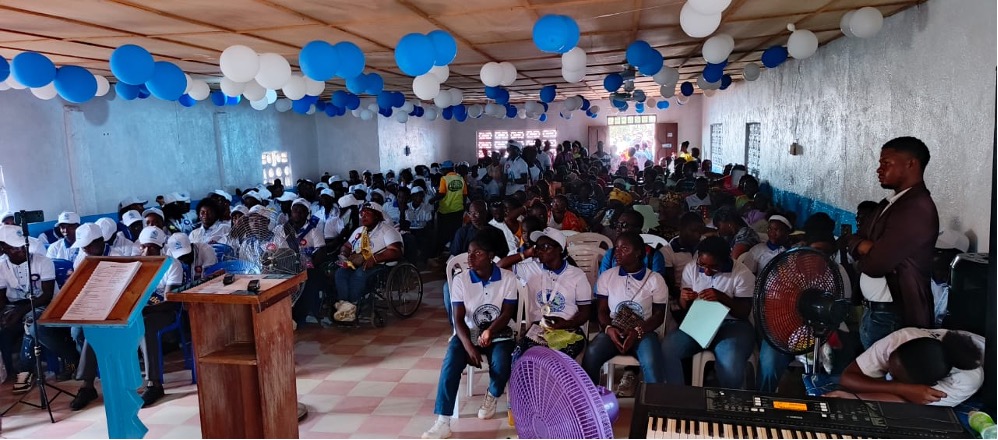
An atmosphere of celebration, gratitude, and fresh hope swept across the campus of the Liberia Opportunities Industrialization Center (LOIC) in Gbarnga, Bong County as graduates dressed in colorful blue-and-white shirts paired with jeans proudly celebrated the successful completion of their vocational and agricultural training programs. The occasion brought together parents, local authorities, development partners, students, and residents who described the event as a major milestone in advancing youth empowerment, skills development, employment opportunities, and community growth in Liberia. 81 females and 142 males
The graduation ceremony highlighted the impact of support from the European Institute of Cooperation and Development (IECD), which partnered with LOIC to strengthen agricultural training and technical education for young people in the county.
Delivering the program overview, LOIC Manager Rachel Paye praised the institution’s progress in expanding vocational opportunities for youth and women across Bong County. She asserted that the graduation represented not only academic achievement but also a pathway toward economic empowerment and self-reliance for hundreds of young Liberians.
According to remarks delivered during the ceremony, LOIC received significant support through partnerships aimed at improving technical and vocational education. Officials disclosed that Bong County authorities allotted approximately US$21,000 to support youth vocational training programs, described as one of the first major county-backed vocational initiatives in LOIC’s history since 1993.
The agriculture component of the program, supported by IECD, restored LOIC’s agriculture department after more than a decade of inactivity. Through the initiative, 17 students were trained in agroecological and market gardening practices and graduated alongside other vocational trainees.
Addressing journalists during the event, IECD Project Officer Boa Lomou said the organization was proud to support practical agricultural education aimed at equipping young people with employable skills and entrepreneurship opportunities.
“We are proud because it is our duty to help our brothers and sisters in the communities,” Lomou said. “We are teaching agroecological market gardening combined with smart agriculture practices so that young people can produce their own vegetables and become self-reliant.”
Lomou disclosed that trainees had already begun producing vegetables from demonstration plots, with harvests exceeding 200 kilograms of cucumber, squash, and radish even before graduation.
“That is encouraging and motivating for the trainees,” he added. “After graduation, they can now start producing on their own.”
He noted that IECD’s contributions included classroom renovation, agricultural tools, laptops, whiteboards, and other instructional materials intended to strengthen teaching and practical learning at LOIC.
Lomou further revealed that the organization is willing to support serious graduates who secure access to farmland and demonstrate commitment to starting agricultural businesses.
“We know agriculture is capital intensive, but we are prepared to support serious students who have land and are ready to start production,” he said.
At the same time, he challenged negative perceptions about agriculture among young people.
“There is this mindset that agriculture is dirty work or only for school dropouts, but agriculture is a big tree with many branches,” Lomou stressed. “Young people should not be discouraged because modern agriculture now includes technology, innovation, and management opportunities.”
During the ceremony, the agriculture department President Clarence Diggs praised IECD and LOIC for investing in youth capacity building and agricultural innovation. He underlines the importance of digital literacy and practical learning in today’s job market.
“There is no way you can learn a trade today without computer knowledge,” Diggs said. “Before applying for jobs, you must use the internet. If farmers grow crops and cannot market them online, how will they reach customers?”
Diggs also highlighted several institutional challenges confronting LOIC, including inadequate equipment for practical learning in departments such as mechanics and tailoring.
“How can students learn mechanics properly without enough vehicles and equipment to practice on?” he asked. “We have many students sharing only a few sewing machines. These are challenges we hope the government and partners will help address.”
According to Diggs, LOIC has trained a total of 223 students across different disciplines, including agriculture, tailoring, engineering, and technical trades. The institution also reported successful job placements for some graduates in institutions and businesses across Liberia, including hospitals and hotels in Nimba County.
One example highlighted during the program was a female plumbing graduate who secured employment at Ganta United Methodist Hospital.
In a keynote address delivered on behalf of Bong County Superintendent Loleyah Hawa Norris, Bong County Human Resource Officer Marthaline Jarwoe described skills development as the foundation for building strong communities and sustainable national development.
Guest speaking on the theme “Building Strong Communities Through Skilled Human Capacity,” Jarwoe said communities become stronger when young people are equipped with education, vocational skills, discipline, and leadership abilities.
“A strong community is built through people who are educated, skilled, disciplined, and committed to serving humanity,” she stated. “Human capacity is the foundation upon which every successful nation is built.”
She stressed that vocational institutions like LOIC are helping combat unemployment, poverty, substance abuse, and social instability by empowering young people with practical skills.
“Today’s graduates represent the hope of the community,” Jarwoe declared. “Your certificates are not just academic documents; they symbolize responsibility and society now expects you to use your skills to improve lives and strengthen communities.”
Jarwoe urged graduates to become job creators rather than depending solely on formal employment opportunities.
“Young people must embrace entrepreneurship, innovation, and creativity,” she said. “Success is not measured only by personal achievement but by the positive impact you make in your communities.”
She also admonished women and girls to continue pursuing vocational and technical education, emphasizing that national development cannot succeed if women are left behind.
For his part, LOIC National Executive Director James Monroe applauded development partners, government officials, and instructors for their commitment to transforming the lives of young Liberians through technical and vocational education.
Monroe described the graduation as evidence that investments in skills training are producing future entrepreneurs, technicians, and nation builders capable of contributing meaningfully to Liberia’s development.
He advised graduates to remain committed to professionalism, discipline, and continuous learning as they transition into the workforce and business sector.
The ceremony concluded with cheers, cultural celebrations, and renewed calls for greater investment in vocational education, agriculture, innovation, and youth empowerment programs across Liberia.






Discussion about this post